
Field Notes
A signal from the bar, the salon, and the seat next to you about where AI adoption really sits.
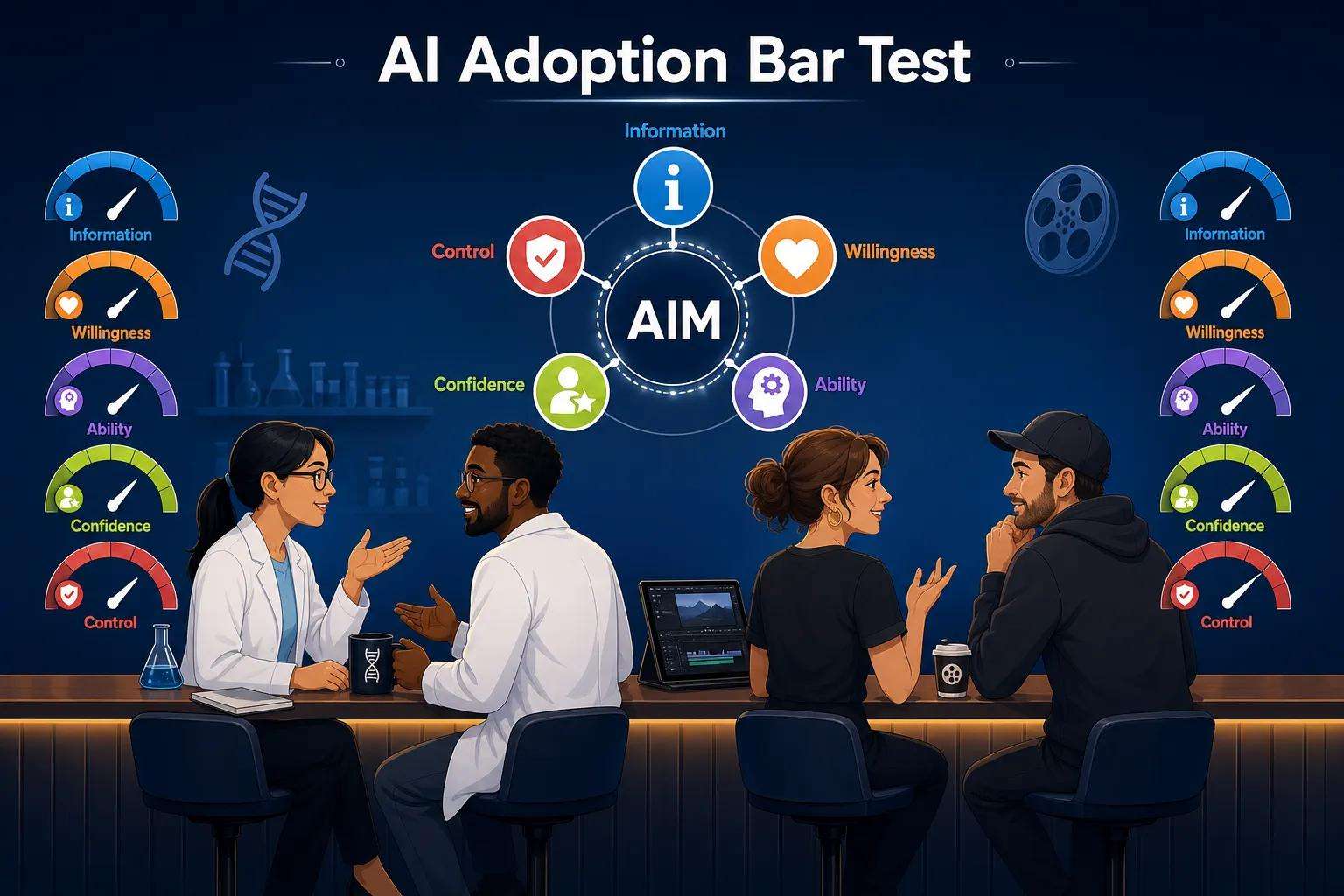
My day began with polite distance and puzzled looks. It ended at a neighborhood bar, talking about film and AI with four people I'd only just met. AI was the thread tying those conversations together.
I work in transformation. Change management is the practice that holds it together. Right now, AI is the biggest transformation every organization faces outside of M&A. So when I describe what I do, implementing AI, building tools for change leaders, embedding AI into a methodology built since 1989, I expect people to lean in. Yesterday, many leaned back. Polite pauses. Slight retreats, the tiny gestures people make when they don't want to follow your enthusiasm into a conversation.
When I travel, I make a habit of finding a local bar or restaurant and talking to whoever's there. It's one of the clearest ways I learn. The bar is where the day untangles.
Three industries, four strangers, one thread
At the next stool, a group working in biomed were bright-eyed and unabashedly enthusiastic about AI: the tools they use, the decisions AI is accelerating, the pace of change in their work. They weren't hedging. They were solving problems and moving fast.
The bartender, who grew up in California, didn't ask what AI is. He described what his small business had already done: specific steps, clear lessons, measurable results. No formal change program. No consultant on retainer. They'd run their own implementation and learned quickly.
Then the conversation shifted, through a reference to friends in film, and within a minute biomed gave way to movies. The same thread, AI, carried us across industries without anyone having to translate.
Earlier that day, in meetings about my professional work, people who are responsible for leading change had quietly stepped away from the topic.
The curve has stopped sorting the way we expected
The adoption curve we teach (early adopters, fast majority, slow majority, laggards) is not sorting the way we expect. Job title, seniority, or org chart no longer reliably predict who will adopt or apply AI first.
What AIM says about it
The Accelerating Implementation Methodology (AIM) frames readiness with five elements: Information, Willingness, Ability, Confidence, and Control. The bar test showed me those elements are no longer moving in lockstep across populations the way they used to.
Willingness is appearing where we didn't plant it. A bartender is past willing and into doing. A researcher is operating with confidence. A film conversation springs up between strangers. Meanwhile, many people whose role it is to lead organizational adoption are still working on willingness, despite having access to information.
Three things I'm sitting with
First: Resistance is landing in unexpected places. Pockets have flipped, and my job now includes diagnosing where willingness really sits before I design a change sequence.
Second: Application-ready voices are already inside most organizations. They're often outside the obvious functions, not waiting for permission, and they become powerful change agents when sponsors notice and back them.
Third: The quiet back-aways are data. When the people tasked with guiding change sidestep AI conversations, the gap is upstream of the workforce, not downstream.
Those small social signals matter in transformation work. The bar test isn't a formal study. It's a signal, and signals matter. This week's signal is that public conversation about AI is already past some of the people whose job it is to lead that conversation.
So here's what I'm going to do more of, and what I would invite anyone reading this to try. Get out. Talk to your neighbors. Be curious. The bar, the salon, the plane: those conversations are telling me more about where AI adoption is headed than many slide decks. Listen to them.
Conclusion
For change and transformation leaders, the lesson is clear: listen beyond formal forums. Casual conversations reveal where willingness and practical application are already living often in unexpected places. By seeking out those voices and supporting them, leaders can surface strong change agents and accelerate adoption. Start the work by being curious: talk, ask, and pay attention to the signals around you to stay ahead in the AI transformation journey.