

Unlock AI success. Start today.
AI is reshaping how organizations operate. But making it work requires more than technology alone. This article explains AI adoption and implementation consulting services, centered on the Accelerating Implementation Methodology (AIM), pragmatic change-management practices, and the role HR plays in enabling change. You’ll get clear steps to assess enterprise AI readiness, build an actionable implementation roadmap, and measure outcomes so AI delivers lasting value.
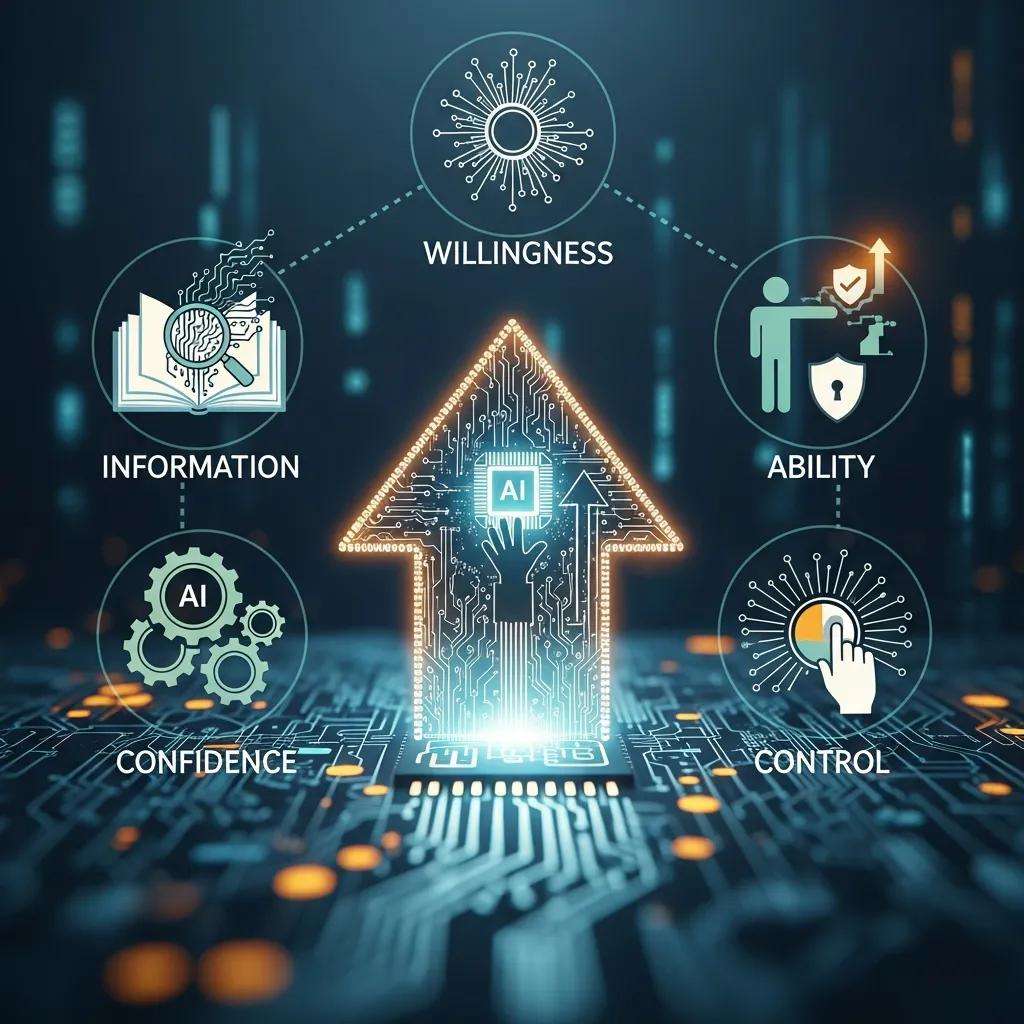
IMA Worldwide developed AIM in 1989. Across 37+ years of field research, the methodology has produced 15 scored diagnostic instruments. The four most often referenced in AI adoption work are the IHA (Implementation History Assessment), IRA (Individual Readiness Assessment), TRI (Targeted Reinforcement Index), and IRF (Implementation Risk Forecast). These instruments make adoption measurable rather than aspirational.
The AIM methodology is a practical, repeatable approach for embedding AI across an organization. It emphasizes leadership engagement and targeted behavior change to align initiatives with business outcomes. AIM not only eases implementation but also encourages a continuous‑improvement mindset and ongoing innovation.
How AIM frames change management for AI implementation
AIM focuses change management on three core actions: defining the change, assessing readiness, and reinforcing new behaviors. That structure keeps stakeholders aligned, lowers resistance, and makes the move to AI‑driven processes more predictable. Clear expectations, honest readiness assessments, and deliberate reinforcement are what help new behaviors stick.
Recent research highlights practical ways to integrate AI capabilities into established change‑management frameworks to improve outcomes.
AI Integration in Change Management: Frameworks & Challenges
This study explores how artificial intelligence (AI) can be integrated into organizational change management frameworks, comparing AI capabilities with Prosci’s ADKAR (Awareness, Desire, Knowledge, Ability, Reinforcement) model. Based on semi-structured interviews with seven AI and change-management professionals in Finland, the paper addresses two core questions: (1) How can AI support different stages of a change framework? and (2) What barriers and challenges arise when using AI in change management?
Potential of AI-integrated change management, 2025
What are the key steps in the AIM framework for AI adoption?
The AIM framework lays out a clear sequence to guide adoption:
- Define the Change: Set precise objectives and the outcomes you expect from the AI initiative.
- Build Agent Capacity: Train and enable change agents so they can lead transitions effectively.
- Assess the Climate: Review organizational readiness, surface blockers, and identify enablers.
Together these steps form a practical roadmap that helps teams move from pilot to scale while keeping adoption sustainable.
Change management strategies that ensure successful AI adoption
Change management matters as much as the model or algorithm. Effective strategies emphasize a clear definition of the change, capable change agents, and visible sponsorship from leaders.
How change‑management professionals can facilitate AI transformation
Change professionals guide organizations through complexity: they clarify the change, develop change‑agent skills, and assess the climate to reduce friction. Their role is translating technical initiatives into organizational change that people can and will adopt.
What role do executive sponsors play in AI change management?
Active, visible sponsorship (actions rather than statements) signals that AI initiatives are strategic and worth investing in. Executive sponsors accelerate adoption by modeling new behaviors, committing resources, and reinforcing priorities.
How to assess enterprise AI readiness for effective implementation
Assessing AI readiness is a practical diagnostic that reveals capability gaps, cultural blockers, and infrastructure needs so you can plan realistically.
What tools and metrics measure AI readiness in organizations?
Common tools and measures include:
- AI Readiness Assessment Tools: Frameworks and surveys that map current capabilities and gaps.
- Implementation Risk Forecast: A forward‑looking estimate of risks that could derail adoption.
- Individual Readiness Assessment: Employee‑level measures of skills, attitudes, and willingness to use AI.
These instruments give leaders a data‑driven view of where to invest before scaling AI.
A complementary approach uses Enterprise Architecture Management principles to assess AI maturity and identify concrete steps that align technology with business goals.
Enterprise AI Readiness Assessment & Maturity Model
AI is changing business models, processes, and IT landscapes. To adapt, organizations need a holistic view that links strategy with systems and people. Enterprise Architecture Management (EAM) offers a framework to evaluate AI maturity, find gaps, and translate strategy into actionable measures that support AI-related objectives.
A maturity model to assess and enhance the AI readiness of an Enterprise Architecture, 2025
How AI readiness affects adoption success rates
Readiness strongly predicts adoption outcomes. Organizations with clear resources, engaged employees, and supportive cultures see better implementation results. Understanding these drivers helps prioritize interventions that increase the likelihood of success.
What role does HR leadership play in driving AI adoption?

HR leaders translate strategy into workforce action. They align talent practices with business goals so people have the skills, incentives, and support to adopt AI tools and workflows.
This role extends to shaping AI strategy, modeling leadership behaviors, and driving broad workforce transformation across the organization.
AI Strategy, Leadership, and Workforce Transformation
This chapter outlines four dimensions of AI-driven change: strategy, leadership, talent and workforce, and transformation. Boards and executives should ensure AI efforts reinforce corporate objectives, using AI for strategic foresight and competitive differentiation. Leadership in the AI era requires human-centered, adaptive approaches that combine data-driven decisions with ethical stewardship, collaboration, and continuous learning. Talent strategies must prepare people for AI-driven shift focusing on reskilling, building AI fluency, and addressing ethical implications of automation.
AI Strategy, Leadership, Talent and Workforce, and
Transformation, R Teigland, 2025
How can HR support change management in AI projects?
HR can enable AI change by:
- Aligning Performance Management: Update goals and metrics so performance reflects new AI-enabled processes.
- Supporting Change Agents: Provide coaching, role clarity, and resources to those leading the change.
- Facilitating Training: Deliver learning pathways that build the skills employees need to work with AI.
These actions help HR build a culture that adapts quickly and confidently to new ways of working.
What strategies help HR leaders engage employees in AI adoption?
HR leaders can boost engagement with practical steps:
- Active Leadership Involvement: Have leaders visibly support and participate in AI initiatives.
- Defining Clear Changes: Communicate what will change, why it matters, and how roles will evolve.
- Building Agent Capacity: Train and empower employees so they can succeed in an AI-enabled environment.
When HR combines clarity with capability-building, employee confidence and adoption rise.
How to develop and implement an AI Implementation Roadmap?
An AI implementation roadmap turns strategy into milestones, capability investments, and measurable outcomes. This creates a clear path from pilot to scale.
What are the essential components of an AI adoption Roadmap?
An effective roadmap includes:
- Define the Change: Clear objectives and success criteria for the AI effort.
- Assess the Climate: A realistic appraisal of readiness, risks, and enablers.
- Generate Sponsorship: Secure visible leadership commitment and resource backing.
These components provide a structured framework that keeps technical delivery and human adoption in sync.
How the Roadmap aligns with organizational change management
A robust AI implementation roadmap embeds change-management principles (stakeholder alignment, training, and reinforcement) so the human side of change is planned alongside technical work. That alignment increases the odds that AI delivers measurable value.
How to measure and sustain organizational AI adoption success?
Measuring adoption lets you learn, adjust, and sustain value over time. Define metrics up front and track both implementation progress and behavioral change.
What metrics indicate measurable AI adoption outcomes?
Useful metrics include:
- Implementation Metrics: Progress on deployment milestones, uptime, and integration success.
- Behavioral Adoption Indicators: Usage rates, workflow changes, and task completion with AI tools.
- Leadership Reinforcement Metrics: Frequency and visibility of sponsorship activities that sustain adoption.
Regularly tracking these measures gives leaders the insight to course-correct and scale responsibly.
How can organizations maintain long-term AI adoption results?
To keep adoption durable, focus on:
- Active Leadership Involvement: Leaders must keep priorities visible and remove obstacles.
- Continuous Reinforcement: Use training, incentives, and feedback loops to reinforce new behaviors.
- Building an AI-Ready Culture: Encourage experimentation, learning, and shared ownership of AI outcomes.
Prioritizing these areas helps organizations turn short-term wins into sustained capability.
Frequently Asked Questions
What are the common challenges organizations face during AI adoption?
Common obstacles include resistance to change, unclear business cases, and limited leadership support. Technical integration with legacy systems, uneven data quality, and skill gaps are frequent blockers as well. Identifying these issues early and planning targeted interventions reduces risk and speeds adoption.
How can organizations ensure employee buy-in for AI initiatives?
Build buy-in through clear, honest communication about benefits and impacts, early involvement of affected teams, and practical training. Share early wins to demonstrate value, and give employees a voice in how AI is used (this builds ownership and trust).
What role does data quality play in successful AI implementation?
Data quality is foundational. AI depends on accurate, complete, well‑governed data. Poor data produces unreliable outcomes and erodes trust. Invest in data governance, regular cleansing, and validation so models run on dependable inputs.
How can organizations measure the ROI of their AI investments?
Measure ROI with a mix of quantitative and qualitative indicators: cost reduction, efficiency gains, and revenue impact, alongside improvements in customer satisfaction and decision quality. Define KPIs before rollout so you can track impact consistently over time.
What are the best practices for developing an AI implementation roadmap?
Best practices include: set clear objectives, assess organizational readiness, engage stakeholders early, establish realistic milestones, and build feedback loops. Iterate based on real-world results to keep the roadmap practical and outcome-focused.
How can organizations foster a culture of innovation to support AI adoption?
Encourage experimentation and make it safe to fail fast and learn. Offer continuous learning opportunities, recognize contributions, and create structures for sharing what works. A culture that rewards learning and collaboration accelerates meaningful AI adoption.
Conclusion
Adopting AI well requires more than models. It needs leadership, change capability, and a clear roadmap. The AIM methodology and disciplined change management provide a practical way to move from pilot to scale while building sustainable value. If you’re ready to make AI work for your organization, explore our consulting services to design a focused, measurable path forward.