
Why middle managers resist change: the structural squeeze
Middle managers are often blamed for killing transformations. The truth is more structural: they are caught between an executive layer that has not cascaded active sponsorship and an employee layer waiting for consistent signals. When middle managers resist, they are usually responding to a structural reality, not an attitudinal one.
Middle manager resistance to change is a structural squeeze, not a character failing. Managers are caught between executive directives and team realities without the sponsorship support needed to drive adoption. AIM addresses this through cascading sponsorship that converts managers into active sponsors, treating them as targets first.
Resistance is structural, not attitudinal
The standard narrative positions middle managers as the villains of change: the layer where executive vision gets diluted or quietly shelved. That narrative is common and counterproductive. It leads organizations to the wrong intervention when the actual problem is structural.
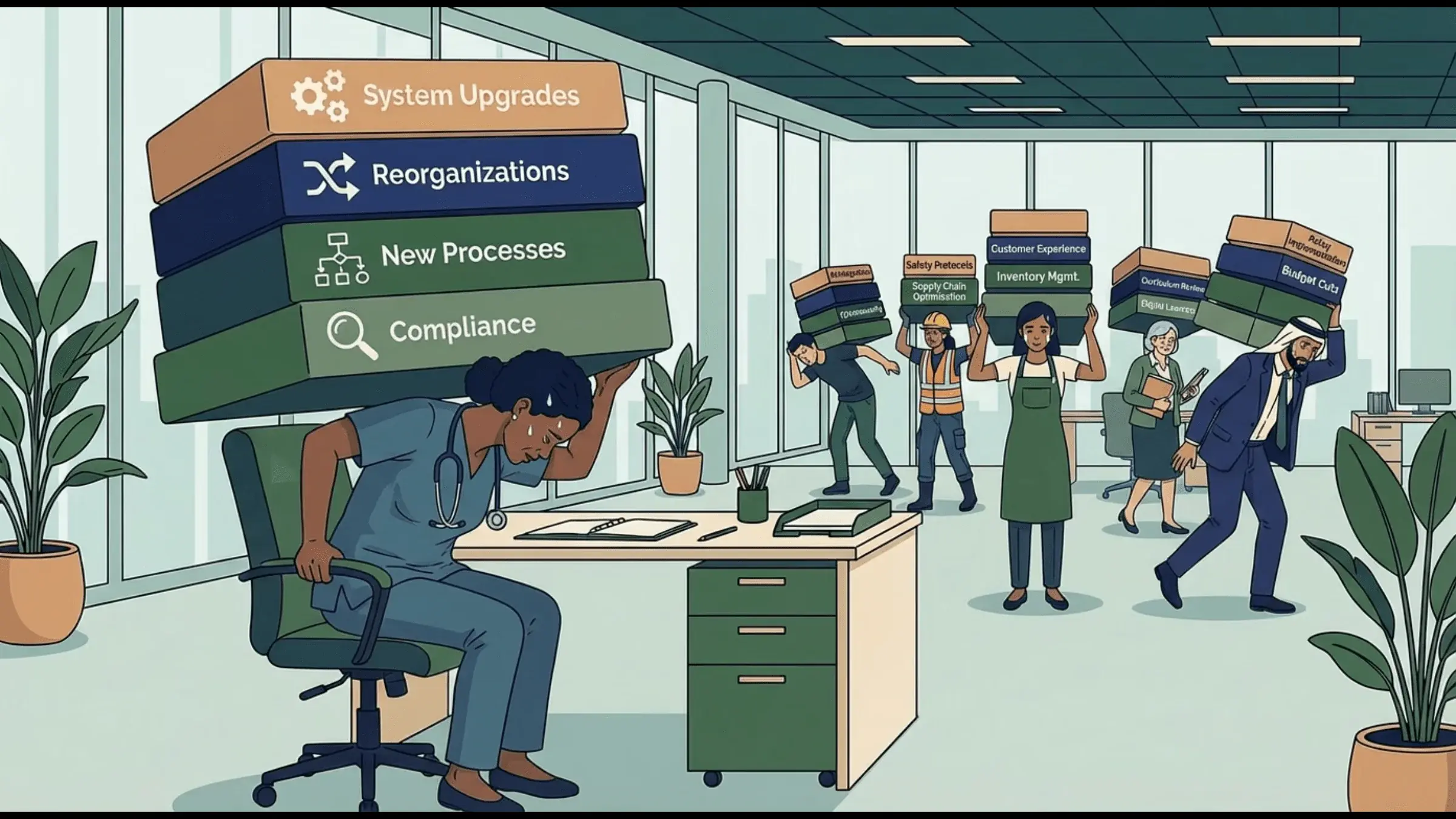
Middle managers do not resist change because they lack commitment. They resist when placed in an impossible position: asked to champion a change their own leaders are not visibly supporting, while their performance metrics still reward the old behavior, and their teams look to them for consistent signals they have not been given the authority to provide.
Through a structural lens, you find not disengagement but rational adaptation. Managers who have watched previous initiatives disappear without resolution learn to conserve political capital. This is not a character failing. It is an organizational learning response to an environment where initiative commitments have historically been unreliable. If you treat the resistance as an attitude problem, you design interventions that do not address the cause.
The sponsorship black hole
In AIM, we use the term "sponsorship black hole" to describe a recurring failure pattern: the organizational layer where executive sponsorship signals disappear before reaching frontline employees. In most organizations, that layer is middle management.
An executive team launches with visible energy, then moves on to the next quarter. The initiative enters middle management territory where no cascaded sponsorship carries it forward. Employees look to their direct managers for signals. The managers, given no active sponsorship from above and no realigned metrics, give no clear signal. The initiative appears to die from employee resistance when it died from sponsorship discontinuity.
The black hole is not intentional sabotage. It is the structural consequence of treating sponsorship as an event rather than an ongoing role. Executives who announce a change have completed a communication task. They have not yet begun the sponsorship work that determines whether the change embeds.
- Initiative energy is high at launch but fades within 60 to 90 days.
- Employee surveys show awareness but low confidence in change success.
- Middle managers describe the initiative differently in different business units.
- Questions escalate upward because managers lack authority to make decisions.
- Frontline employees say they have not heard anything from their supervisor about the change.
Cascading sponsorship: filling the black hole
The antidote is cascading sponsorship: an architecture in which every level of management with authority over the target population is an active, equipped, and accountable sponsor at their level. This is not a communication cascade. It is a sponsorship cascade.
Senior leaders actively sponsor the change with their direct reports in the mid-level layer. Those managers sponsor the change with the frontline managers who report to them. Frontline managers sponsor the employees they supervise. At each level, the sponsoring leader is visible, consistent, and accountable.
The result is that employees at every level receive change signals from the person whose opinion most directly affects their work and career: their direct manager. That is the signal that moves behavior.
Cascading sponsorship requires more than intention. Each layer must be equipped with the knowledge, tools, and authority to sponsor. A middle manager asked to sponsor a change they do not understand, or that conflicts with their metrics, cannot cascade effectively regardless of willingness.
AIM builds cascading sponsorship into every implementation plan, identifying at each layer what active sponsorship looks like, what barriers exist, and how those barriers must be addressed before the cascade can function.
Why misaligned reinforcement puts managers in an impossible position
Even a middle manager who genuinely supports a transformation cannot sponsor it when their performance metrics still reward the old behavior. This is one of the most structurally destructive forms of misalignment, and one of the least frequently addressed.
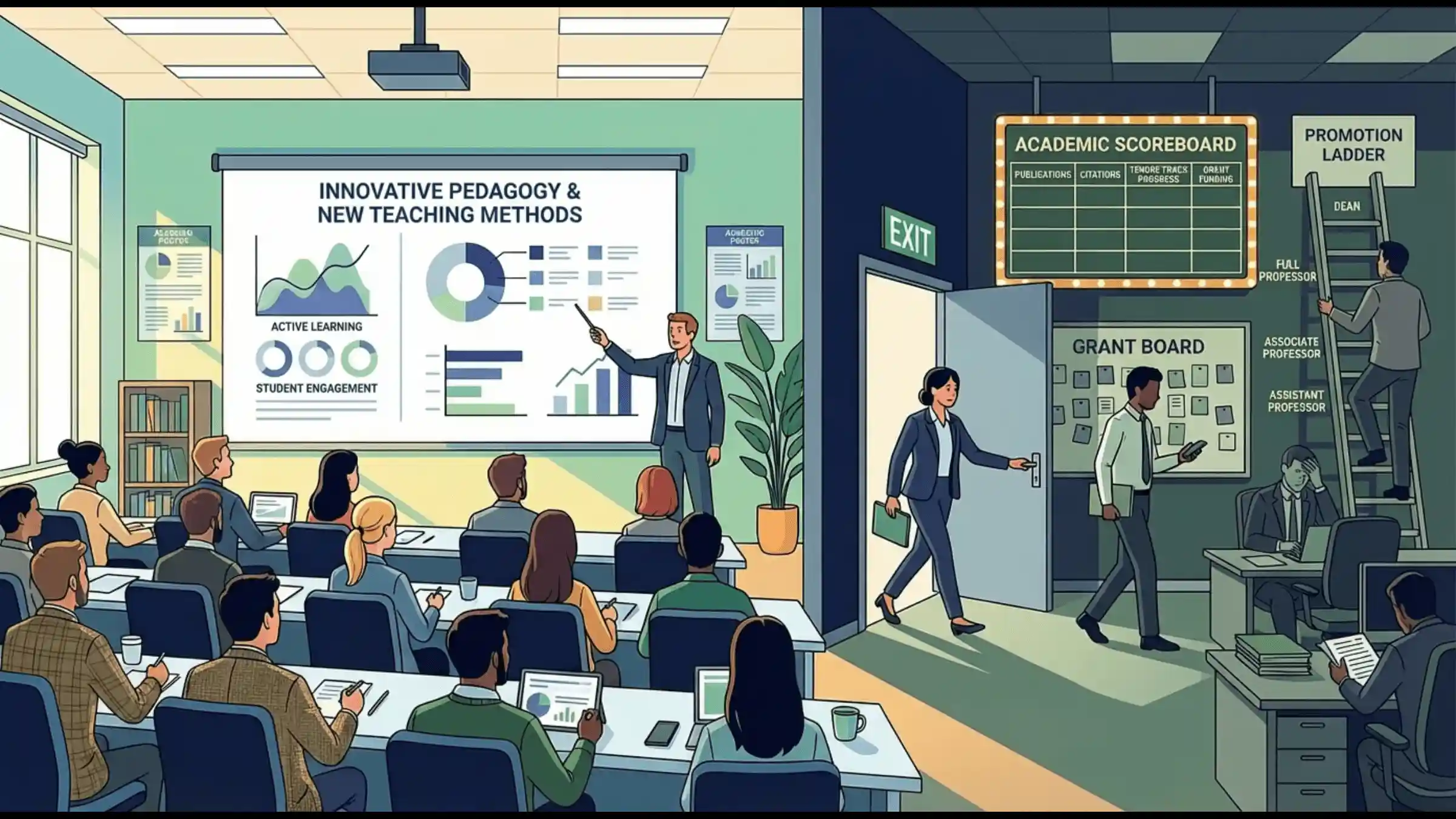
Consider a manager asked to sponsor a shift to a collaborative decision-making process, while their annual review is still based on individual unit metrics that reward speed and autonomy over coordination. The incentive structure sends a clear signal: the old behavior produces consequences that matter. The new behavior is something leadership talks about but does not measure.
Managers in this position do not hold back because they oppose the change. They hold back because the organizational signal system is telling them one thing while the communication system is telling them another. Behavior follows incentives. When incentives and required behaviors conflict, incentives win reliably. Addressing this requires explicit attention to performance reviews, promotion criteria, team-level metrics, and the informal recognition patterns of their supervisors.
What actions must senior leaders take?
Middle manager activation is not a middle management task. It is a senior leadership responsibility. These five actions address the structural causes rather than the symptomatic expression.
Build cascading sponsorship architecture
Define what active sponsorship looks like at each management layer and hold each level accountable for cascading to the next. This is an organizational design task, not a communication task.
Treat middle managers as targets first
Before asking managers to sponsor change with their teams, ensure they have been through an effective change process themselves: they need to understand the change, believe in its viability, and have the tools to lead it.
Align performance metrics with behaviors
Identify every performance element that currently rewards the old behavior at the middle management level, and create explicit plans to realign these systems before or concurrent with behavioral expectations.
Provide decision-making authority
Managers cannot sponsor changes they cannot adapt to their team's context. Provide explicit authority to make local decisions, with clear parameters. Autonomy within structure produces sponsorship; constraint without support produces resistance.
Hold sponsors accountable through adoption
Track sponsorship quality as an implementation metric, not just project completion. Sponsors who disengage after launch need to be re-engaged or replaced before the change stalls.
Middle managers in change: key questions
Why do middle managers resist change even when they understand the business case?
Understanding the business case is not sufficient to produce sponsorship behavior. Middle managers who have not received active sponsorship from above, whose performance metrics still reward old behaviors, and who lack decision-making authority to adapt the change to their team's context are rationally constrained from acting as effective sponsors regardless of their intellectual agreement.
What is the sponsorship black hole in change management?
The sponsorship black hole is the organizational layer where executive change signals disappear before reaching frontline employees. It occurs when senior leaders treat launch communications as completed sponsorship and do not cascade active, visible commitment through the middle management layers that employees take their signals from.
What is cascading sponsorship and how does it work?
Cascading sponsorship is an architecture where every management layer with authority over the target population actively sponsors the change at their level. Senior leaders sponsor mid-level managers, mid-level managers sponsor frontline managers, and frontline managers sponsor employees directly. Each layer is equipped, empowered, and held accountable as a sponsor in their own right.
How should organizations treat middle managers before activating them as change sponsors?
Organizations must treat middle managers as change targets first, ensuring they understand the initiative, believe in its viability, and possess the tools to lead it. AIM's approach requires that managers complete their own adoption process before being asked to sponsor adoption with their teams. Skipping this step produces sponsors who cannot answer basic questions from their direct reports.
What role do performance metrics play in middle manager resistance to change?
Performance metrics that still reward old behaviors create a structural contradiction for managers asked to champion new ones. Managers rationally follow the incentive system that determines their reviews, promotions, and compensation. IMA Worldwide's reinforcement mapping process identifies these conflicts early so organizations can realign metrics before expecting sponsorship behavior.
More from why transformations fail
Middle manager resistance is one expression of a broader set of structural failure patterns. Explore the connected topics.

Are your middle managers set up to sponsor change?
IMA Worldwide helps organizations build cascading sponsorship, align reinforcement, and equip managers as active sponsors so change reaches the front line.
Contact us Why transformations fail