

Before You Scroll
AI moves fast and sometimes jumps to the next step without finishing the current one. AIM change management, the Accelerating Implementation Methodology, keeps work focused on specific behaviors, real Targets, and reinforcement, so plans become implementation. For organizations applying AI change management, this methodology grounds fast-moving AI output in real behavior change.
Understanding the AIM Framework

The Accelerating Implementation Methodology (AIM) is a behavior-focused change management framework built from decades of field research into how organizations successfully adopt new ways of working. Rather than tracking activities or communications alone, AIM centers every initiative on three questions: what behavior needs to change, who must change it, and what will reinforce that change once it is made. Applied to AI-driven work, AIM gives fast-moving AI output a disciplined structure: Targets, Sponsors, Agents, and reinforcement, so that plans translate into real implementation rather than stopping at information.
When AI Finishes Before You Start
I’m defining the foundation of change for an information technology initiative. I’ve defined:
What is changing
Why are we changing
Consequences of not changing
I am now ready to drill into Implementation Metrics.
Then AI announces: “Your change definition (foundation) is complete. Let’s move to implementation.”
I haven’t even gotten halfway through the definition. What it’s calling “complete” doesn’t cover the key question of what people will be doing differently for this change to be successful.
This happens constantly. AI races ahead, declares victory, and jumps to the next problem while I’m still focused on the current one. It’s not helpful; it’s noise.
In AIM change management, the definition isn’t finished until we can answer for each target group what’s in it for me and what does it mean for me. This information is used when I plan for communications, reinforcement, readiness, and sponsorship. Skipping it just puts us under pressure later.
AIM Change Management and the Problem with AI Overreach

AI interprets everything through its frame of reference: the patterns in its training data. When I ask for help building a resistance strategy, it often jumps straight to generic advice: “Communicate early and often. Address concerns proactively.”
That’s not implementation.
It hasn’t asked the questions AIM asks: Who are the Targets? What behavior are they changing from and to? What’s reinforcing the current state? Without those answers, resistance strategies are just platitudes.
That data-driven logic is powerful, but it misses the human patterns AIM measures and manages. Mine is built on years of field study on how organizations function. The gap between those two creates real problems.
Takeaway: Without AIM and me, AI can’t distinguish between activity and behavior change; it delivers information, not implementation.
The Stakes When AI Jumps Ahead

When AI’s enthusiasm goes unchecked, it doesn’t just skip steps; it breaks the logic chain AIM depends on. Here’s what happens:
Communication plans that look comprehensive but never identify who the Targets are or what specific behavior change they’re validating
From–To mappings that describe activities instead of behaviors: “implementing the new system” instead of “making decisions using real-time data online rather than manual monthly status reports”
Key Role Maps that confuse Sponsors with Agents because AI doesn’t understand that the person funding the initiative isn’t always the one with influence to change behavior
Without a methodology to anchor the work, AI produces outputs that look professional but miss the fundamental questions that AIM always asks:
What behavior needs to change? Who needs to change it? Why would they?
Takeaway: Without AIM, AI creates outputs; with AIM, you create implementation.
Using AIM to Redirect AI

I use AI to accelerate my work: building Business Cases for Action, mapping From-To behaviors, and creating Key Role Maps that clarify Sponsors, Agents, and Targets. AI organizes information faster than I can. AIM principles drive the information needed to drive implementation.
When my AI assistants decide to jump to “done,” here’s how I bring them back:
Define the change as a behavior shift, not an activity
When AI suggests “adopt the new process,” I ask: What specific action are people taking today, and what will they do instead? AI can draft language, but I decide whether it reflects a measurable behavior change.
Identify Targets first, everything else second
AI wants to map all stakeholders at once. I focus it: Who must change their behavior for this initiative to succeed? Once we’re clear on Targets, Sponsors and Agents become obvious.
Connect reinforcement to what Targets actually experience
AI tracks data, but AIM determines which metrics reflect real human objectives. When AI suggests “monitor adoption rates,” I ask: What reinforces the new behavior in the moment a Target makes a decision? Is it feedback from their manager? System access? Recognition?
Map roles based on influence, not title
AI surfaces organizational charts. I redirect it: Who has the credibility to validate this change for Targets? That’s often not the executive sponsor; it’s the respected team lead or the peer who successfully made the shift first.
From Org Chart to Implementation Map
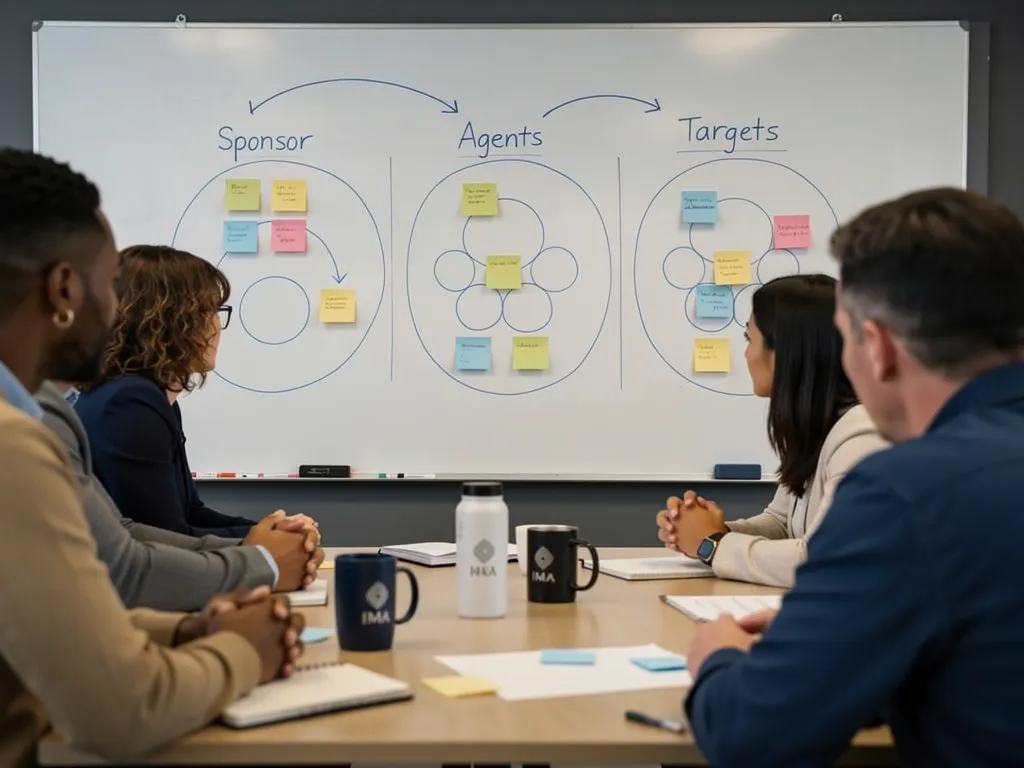
Here’s a real example. I asked AI to help build a Key Role Map for an initiative. It immediately identified the VP of Portfolio as the Sponsor and listed department heads as Agents.
I stopped it. “Who are the Targets?”
The Targets were team members, program managers, and executives who needed to shift from manual status reports to live dashboards. The VP wasn’t their Sponsor; their direct managers were. The real Agents weren’t department heads; they were program managers who could demonstrate how the new approach reduced the amount of time they spent creating status reports.
AI had created an org chart. Together, we created an implementation map.
AI drafts the picture. AIM principles drive what matters in it.
Why AIM Works as a Guardrail

AIM is behavior-focused, not activity-focused. It forces specificity: not “communicate the change,” but “what behavior are Targets changing from and to?” That precision redirects AI from broad patterns to actionable implementation.
Implementation is local. It happens in relationships, not reports. AI can support those relationships by organizing information, but it can’t read the room. It doesn’t know when resistance comes from fear, fatigue, or confusion. It doesn’t sense the subtle power dynamics that reveal who genuinely holds Sponsorship.
That’s where I come in. I translate AI’s speed into focused action that aligns with how change actually happens.
Takeaway: AI creates outputs. AIM creates implementation.
Keeping AI Grounded: The Human Role

I work with multiple AI tools because each has strengths and weaknesses. When one drifts and loses focus, I switch to another. I check their work against each other. And when any of them gets excited and oversteps, I refocus them on the current work using AIM.
AI brings energy and speed. AIM brings focus and methodology. Together, we create a partnership grounded in implementation, not aspiration.
When AI declares the plan finished, that’s my cue to ask:
Have we identified the specific behavior change?
Do we know who the Targets are and what’s reinforcing their current behavior?
Have we mapped Sponsors and Agents based on influence, not assumption?
If the answer is no, the plan isn’t finished. And AI needs to slow down and focus on one real change at a time.
Get Started with AIM for Grounded AI Implementation

If you’re working with AI on change initiatives and want to keep implementation grounded, AIM provides the methodology to redirect speed into focus.
At Peacock Hill Consulting, our change management consulting practice applies the AIM change management methodology to help organizations turn AI-driven insights into real behavior change.
Frequently Asked Questions
What is the AIM framework in change management?
AIM, the Accelerating Implementation Methodology, is a behavior-focused change management framework that centers every initiative on three questions: what behavior needs to change, who must change it, and what will reinforce that change once it is made. It gives fast-moving AI output the structure of Targets, Sponsors, Agents, and reinforcement so plans translate into real implementation.
How does AIM change management apply to AI-driven initiatives?
AI can organize information and draft plans quickly, but it does not distinguish between activity and behavior change on its own. AIM redirects that speed toward specific, measurable behavior shifts, identifying Targets first, then Sponsors and Agents, so AI-generated plans are grounded in how people actually change how they work.
What is the difference between a Sponsor and an Agent in AIM?
A Sponsor is the person with the authority and credibility to legitimize a change, while an Agent is the person with the influence to help Targets adopt the new behavior. AI tools often confuse the two, treating the person funding an initiative as automatically having influence over behavior, when that influence more often sits with a trusted team lead or peer.
How does AIM address resistance to change?
AIM addresses resistance by first identifying the Targets, the specific behavior they are changing from and to, and what currently reinforces their existing behavior. Rather than offering generic advice like communicating early and often, AIM builds resistance strategies around the real reinforcement Targets experience day to day.
Who should be involved in an AIM-guided change initiative?
Every AIM initiative involves three roles: Targets, the people who must change their behavior; Sponsors, the individuals with the authority to legitimize the change; and Agents, the people with the influence to help Targets make the shift. Mapping these roles accurately, based on influence rather than title, is central to keeping implementation grounded.
