
Reinforcement & Sustained Adoption
Reinforcement in Change Management: Why What Gets Rewarded Gets Repeated
The most technically sound change initiative will fail if reward, recognition, and accountability systems continue to reinforce the old behavior. Reinforcement is not a soft consideration at the end of implementation. It is the primary mechanism through which new behaviors become permanent ones.
Where Reinforcement Sits in AIM
The EMR Position of Reinforcement
In IMA's Accelerating Implementation Methodology (AIM), reinforcement occupies a specific and critical position in the change architecture. AIM is structured around three integrated workstreams: Education and Training, Management Sponsorship, and Reinforcement. Of these, reinforcement is the one most consistently underfunded, underdesigned, and addressed too late in the implementation cycle.
AIM positions reinforcement as the bridge between knowledge and behavior. Training creates capability. Sponsorship creates permission. Reinforcement creates permanence.
The EMR framework is not sequential. Reinforcement design does not happen after training is delivered and sponsorship is established. It happens in parallel, because the structural elements of reinforcement (performance metrics, recognition systems, and accountability mechanisms) require lead time to change and must be in place before new behaviors are expected to persist.
An organization that launches a change without a reinforcement design has built a car without an engine: it may look right, but it will not go anywhere on its own.
The Mental Model
Reinforcement Is the Submerged Mass
The most expensive mistake in change implementation is treating reinforcement as the visible work. Training programs, town halls, and announcement campaigns are above the waterline: visible, scheduled, easily counted, and easily celebrated. They produce awareness. They do not produce adoption.

Training. Communication. Town halls. Launch events. The work the organization can see, schedule, and check off. It produces awareness, not adoption.
Performance metrics. Recognition systems. Manager behavior. Promotion criteria. Quiet accountability. The mass that actually determines whether new behavior survives the first quarter.
The visible work cannot move the submerged mass. When reinforcement systems are not redesigned in parallel, the iceberg holds the change exactly where it was.
The Core Problem
The Contradiction That Kills Adoption
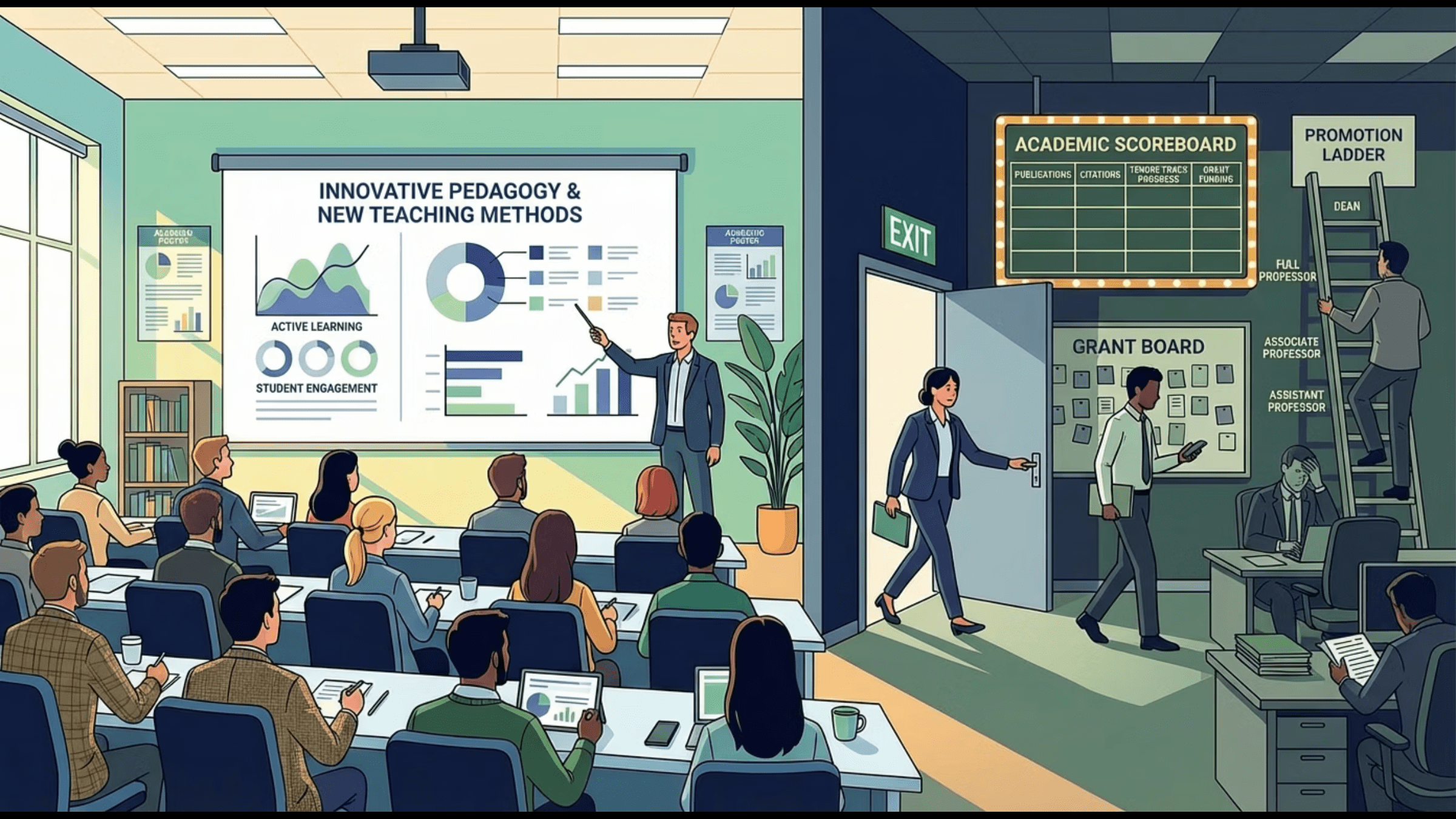
The most destructive reinforcement failure is not the absence of positive reinforcement for new behavior. It is the active presence of positive reinforcement for old behavior running simultaneously with the expectation of new behavior. Employees resolve this organizational contradiction in the most rational way available to them: they continue doing what is rewarded.
The Organization Says
Adopt the new process, collaborate across teams, use the new system, change how you approach this work.
The Organization Rewards
Speed, individual metrics, workarounds that maintain old throughput, and behavior consistent with the previous model.
This contradiction is not subtle to employees. Every performance signal (manager feedback, scorecard, informal recognition) tells them the real priority is the one being measured, not the one being communicated.
The contradiction is organizational, not personal. Performance management lives in HR. Recognition lives in culture or engagement teams. Operational metrics live in finance or operations. When the change team has no explicit mandate to engage these functions and redesign their relevant systems, the contradiction persists and the change fails.
The Adoption Risk Window
Understanding the Reinforcement Gap
Even in organizations that design reinforcement into their change architecture, a gap typically exists between when behavior change is expected and when reinforcement systems are updated to reflect the new expectations. This reinforcement gap is a critical vulnerability window in every implementation.
New Behaviors Communicated
Old reinforcement systems remain fully active. The contradiction begins immediately.
Expected, Not Reinforced
New behaviors expected but not yet reinforced. Adoption is most vulnerable. Reversion risk is highest here.
Reinforcement Updated
Systems updated to reward new behaviors. Adoption stabilizes and compounds over time.
The reinforcement gap cannot be eliminated entirely in most organizations, because changing performance and recognition systems takes time. But it can be minimized by beginning reinforcement design early, and bridged by deploying informal, relational reinforcement from sponsors and managers during the period when formal systems have not yet caught up. Managers who actively recognize new behavior in real time provide critical reinforcement continuity during this window.
Practical Design
What Effective Reinforcement Looks Like in Practice
Reinforcement is not a single mechanism. It is a system of formal, informal, and structural elements that together communicate what the organization actually values. Effective design addresses all three categories and ensures they are aligned rather than contradictory.
Performance Metrics
Performance management systems, goal-setting frameworks, and operational scorecards are updated to include adoption indicators tied to the change. Old metrics that reward contrary behavior are retired or reweighted.
Recognition & Rewards
Formal recognition programs, awards, and visible acknowledgment from senior leaders are directed at individuals and teams demonstrating the new behaviors. Early adopters are celebrated publicly and specifically.
Manager Behavior
Direct managers provide real-time, specific recognition when employees exhibit the new behavior, model it themselves, and connect feedback to adoption. Manager reinforcement is the highest-frequency signal employees receive.
Peer & Social Signals
When team culture treats the new behavior as normal and expected, peer reinforcement becomes a powerful adoption driver, cultivated through team-level recognition and influential informal leaders.
System Design
The tools and workflows employees use daily either make the new behavior easier or harder than the old one. Systems that require extra effort create structural friction that undermines adoption even when other elements are aligned.
Accountability Consequences
When non-adoption has no consequence, the organization signals that adoption is optional. Fair, transparent consequences for sustained non-adoption complete the system and prevent opt-out norms.
Methodology Principles
Three Dimensions of Effective Reinforcement
Beyond the formal, informal, and structural categories above, every reinforcement must meet three quality dimensions to actually change behavior. These dimensions are the methodology's design constraints, not optional refinements. A reinforcement that fails on any one of them produces awareness without adoption.
Timing
Is reinforcement delivered close enough to the behavior to create a clear association? Reinforcement tied to annual cycles loses its conditioning power.
Relevance
Is the reinforcement valued by the specific employee population receiving it? Recognition that matters to one group may be invisible to another.
Intensity
Is reinforcement strong enough relative to competing reinforcement for old behavior? High intensity is required when existing rewards still favor the prior model.
Diagnostic Tool
The TRI Metric: What Motivates People vs. What Management Is Doing
IMA uses the Targeted Reinforcement Index (TRI) to measure the gap between what actually motivates the target population and what management is currently doing to reinforce the change. The TRI surfaces this gap from the target population's own frame of reference, not from leadership's assumptions about what should motivate them, and produces a profile that identifies where the architecture is strongest and where the design is failing the people it is meant to move.
A TRI diagnostic interviews representatives from the target population to surface what they actually find motivating, then maps that against what management is currently doing across formal and informal reinforcement systems. The output identifies specific gaps between perceived and actual reinforcement, along with the interventions required to close them. Organizations that conduct a TRI diagnostic before launch address reinforcement gaps proactively rather than diagnosing adoption failure after reversion has already occurred.
Closing the Loop
Accountability Completes the Reinforcement System
A reinforcement architecture built entirely on positive incentives is incomplete. Positive reinforcement drives adoption among employees who are intrinsically motivated or who respond readily to recognition. It does not, by itself, prevent quiet non-compliance from taking root among those who calculate that adoption is optional because non-adoption has no consequence.
This is not a punitive argument. It is a structural one. When accountability for adoption is absent, the implicit message is that the change is elective.
Employees watch whether colleagues who do not adopt experience any consequence. When the answer is no, rational actors update their own calculus accordingly. Accountability and positive reinforcement are not opposites in a well-designed system. They are complementary signals that together communicate: the new behavior is valued, recognized, and expected.
For Leaders
5 Actions to Build Aligned Accountability
Define adoption milestones before launch
Communicate behavioral adoption milestones clearly to employees and their managers before launch, not after the first quarter of drift.
Make managers accountable for adoption
Build adoption progress into the metrics that managers themselves are reviewed on. Manager accountability is the most reliable lever for sustained team-level adoption.
Address non-adoption directly
Address non-adoption directly and specifically, rather than issuing general communications about compliance. General messages reach no one in particular and change no behavior.
Apply accountability consistently
Inconsistent application creates the perception of selectivity and erodes the legitimacy of the entire system. Apply across business units, levels, and tenure equally.
Differentiate cannot from will not
Distinguish employees who cannot adopt due to structural barriers from those who will not adopt despite adequate support. Design different interventions for each.
Why AIM Works
What Practitioners Say About AIM
Having led change management for several Fortune companies, I have reviewed and used multiple change management models. The best one that I have used, and that has moved the change needle the farthest, is AIM. No model gets to the heart of change and produces actual business results quicker.
I am very impressed with your model and the emphasis on Installation versus Implementation. I have taught another well-known CM methodology at my company but it falls short and lacks the reinforcement piece.
AIM has been a tremendous aid in making cultural barriers more visible and opening the dialogue about behaviors that need to change to meet our target outcomes.
The AIM methodology is one of the best investments we've ever made.
Common Questions
Frequently Asked Questions
What is reinforcement in change management and why does it matter?
Reinforcement is the system of formal, informal, and structural signals that communicate to employees what the organization actually rewards and holds them accountable for. It is the mechanism through which new behaviors become permanent rather than temporary. Without aligned reinforcement, training and communication produce awareness but not sustained behavioral change.
What is the reinforcement gap and how does it cause adoption failure?
The reinforcement gap is the period between when new behaviors are expected and when reinforcement systems are updated to reward them. During this window, employees adopt new behaviors while existing systems still reward old ones. This structural contradiction produces reversion. Closing the gap early through reinforcement design and manager-level informal reinforcement reduces adoption failure significantly.
How does reinforcement reduce resistance to change?
Much of what looks like attitude-based resistance is actually a rational response to structural misalignment. When reinforcement systems align with new behaviors, the structural incentive for resistance is removed. Employees who were conserving effort pending commitment receive the signal that commitment is real, and adoption increases.
What is the TRI and how is it used?
The Targeted Reinforcement Index is an AIM diagnostic available on the Comparative Agility platform. It measures the gap between what actually motivates the target population and what management is currently doing to reinforce the change. The diagnostic surfaces what specific reinforcements matter from the target population's own frame of reference, not leadership's assumptions about what should motivate them. Timing, Relevance, and Intensity remain methodology principles for designing reinforcement, separate from what the TRI itself measures.
Who is responsible for reinforcement during a transformation?
In AIM, reinforcement is a leader responsibility. Change teams can design prompts and tools, but only leaders and managers control priorities, resources, recognition, and consequences at the level where behavior actually changes. AIM treats reinforcement as part of the management sponsorship workstream. It is not part of communications or training.
How do you measure whether reinforcement is working?
AIM focuses on observable behaviors. You measure reinforcement by tracking whether new behaviors are happening under real pressure, not just when being observed. Adoption rates tracked at 30, 60, and 90 days post-launch are the most reliable signals.
Why do employees ignore change even after training?
Training supports ability, but adoption fails if reinforcement contradicts the training. If people are rewarded for speed, output, or legacy metrics that the change disrupts, they follow the rewards, not the training. This is the most common and most preventable cause of post-training reversion.
What happens if reinforcement systems are never updated?
The result is installation without implementation. The change goes live but adoption remains optional, performance systems keep rewarding old behaviors, and the organization drifts back to baseline. This is how organizations end up relaunching the same initiative two or three years later.
Related Reading
More from Why Transformations Fail
Reinforcement failure connects directly to every other structural cause of implementation failure. Explore the adjacent patterns below.
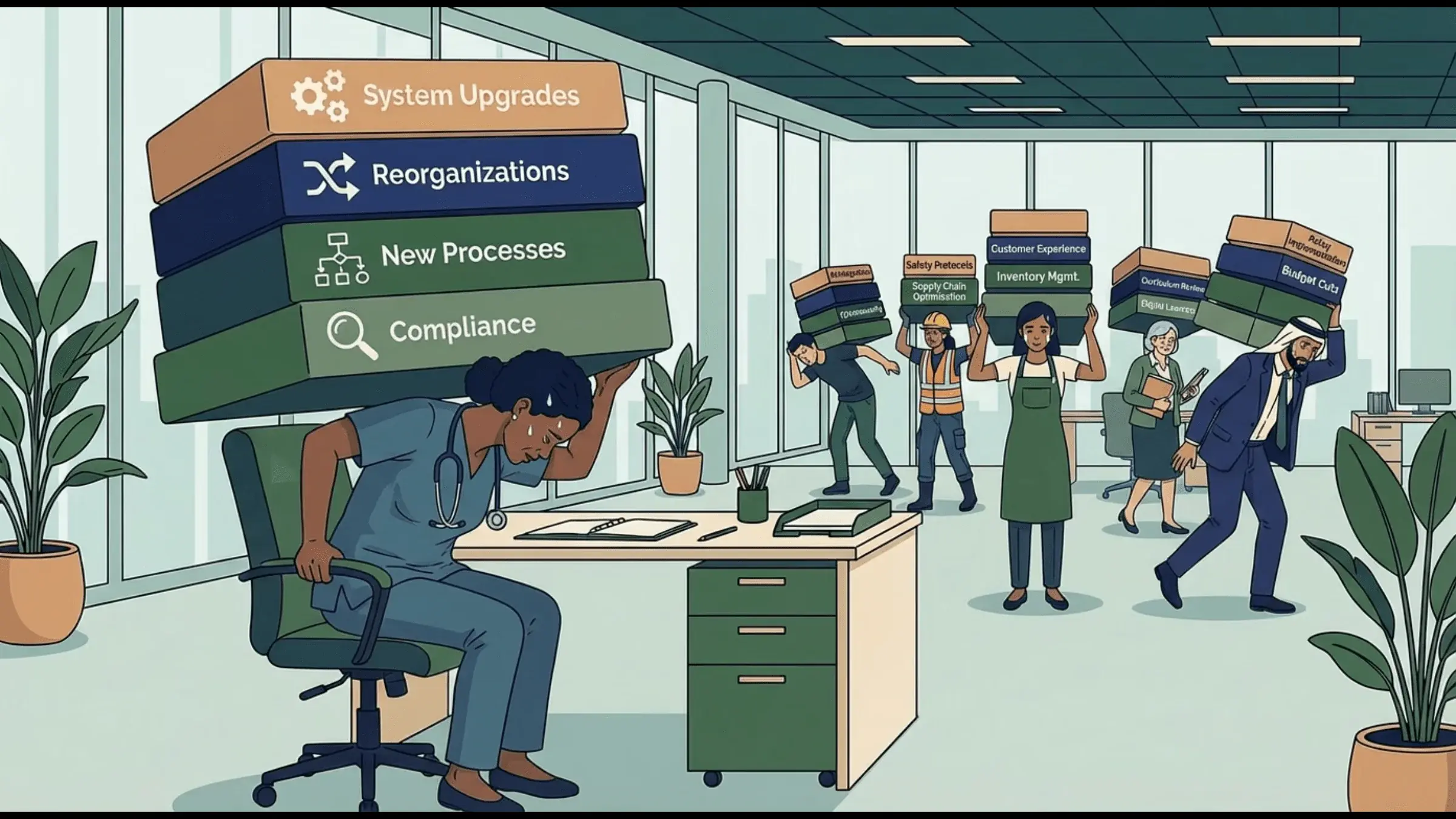
Change Fatigue Is a Capacity Problem, Not an Attitude Problem
Read article →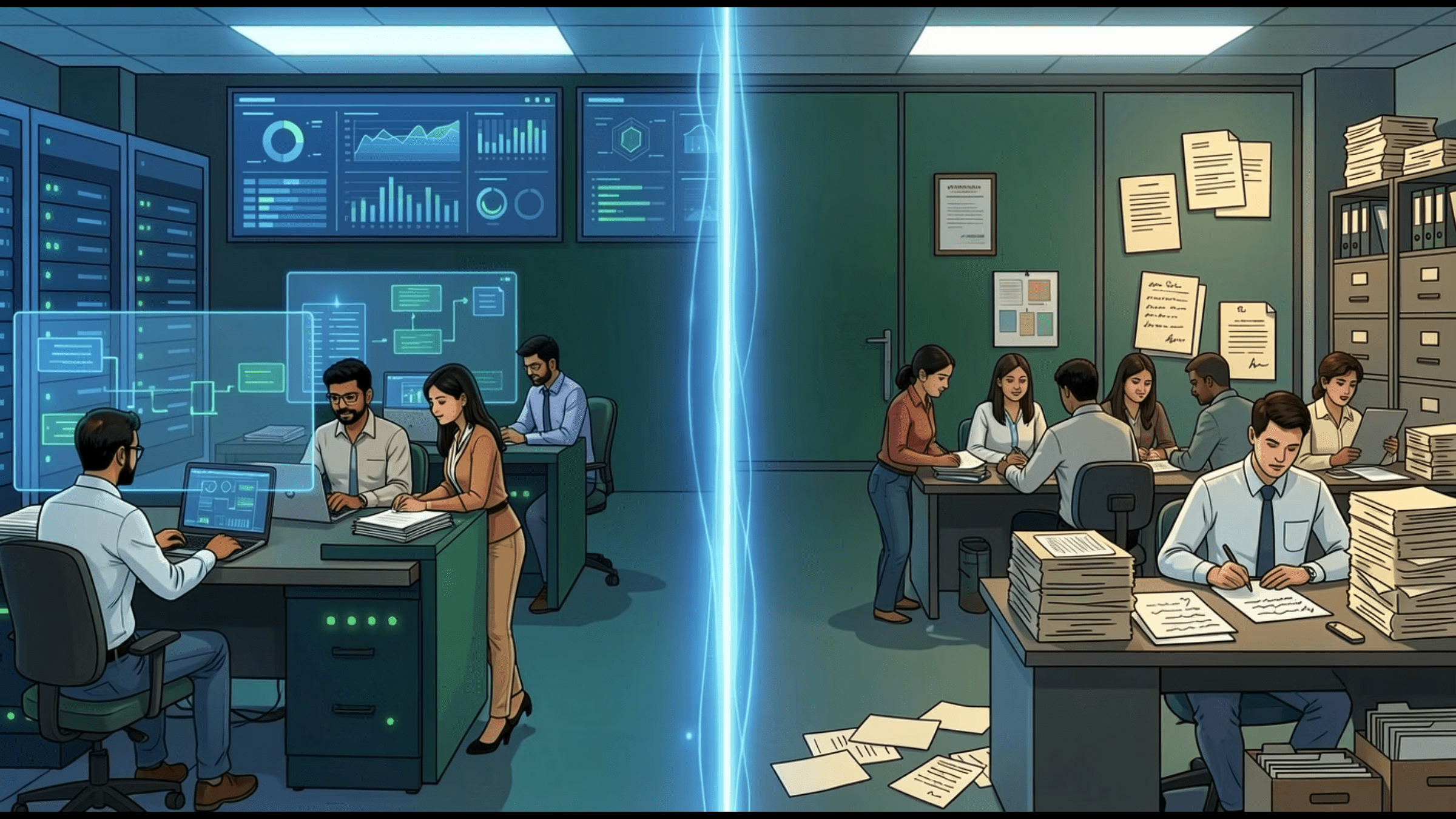
5 Root Causes of Implementation Failure in Change Management
Read article →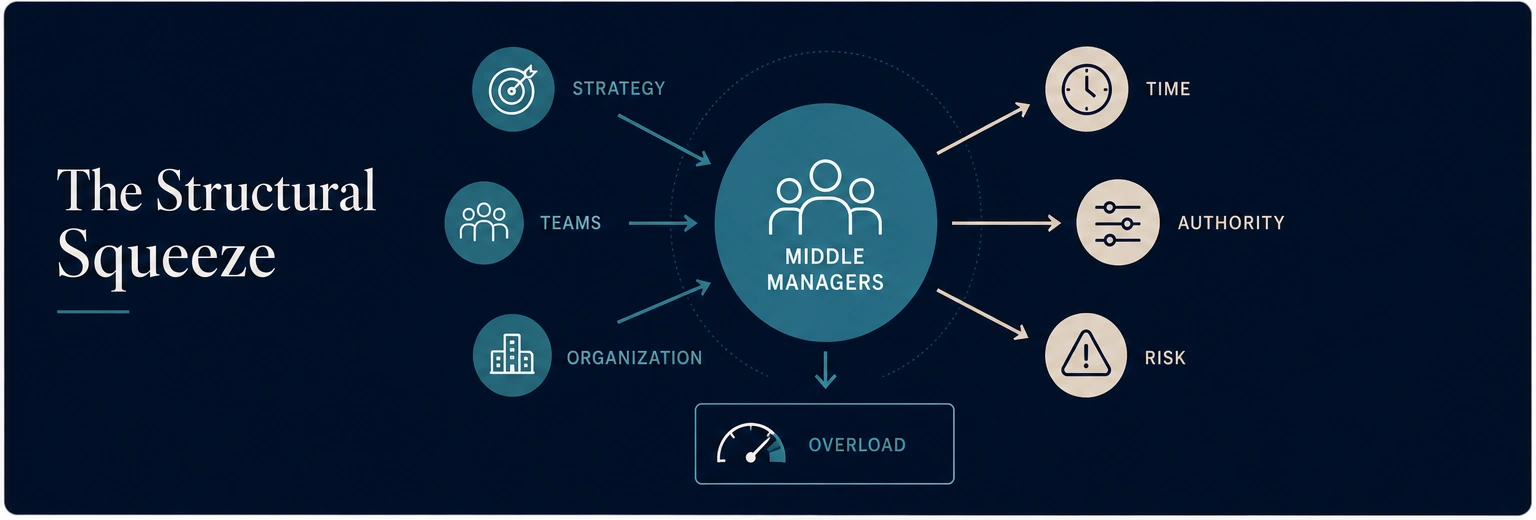
Why Middle Managers Resist Change: The Structural Squeeze
Read article →
Why Employees Resist Change: 5 Structural Causes Behind the Pushback
Read article →
Change Management Leadership: The 6 Non-Delegable Tasks
Read article →Are Your Reinforcement Systems Supporting the Change?
IMA Worldwide helps organizations design reinforcement architectures that align formal systems, manager behavior, and accountability structures. We sustain adoption from launch through full embedding using the Accelerating Implementation Methodology.