

Build Change Readiness: 10 Practical Tips for Effective Organizational Change Management
By Ann Marvin, IMA Worldwide
Business environments move quickly, and organizations that can adapt do better. Change readiness is simply how prepared your organization is to roll out and sustain a change. This article lays out practical, proven steps to strengthen that readiness so transitions are smoother and outcomes are more reliable. Many teams stall because of resistance, unclear direction, or gaps in skills. By intentionally building readiness—through communication, training, and leadership—you can reduce risk and improve results. Below you’ll find ten actionable tips, ways to measure readiness, and the leadership and communication practices that make change stick.
This guide is written for program sponsors, change practitioners, HR and learning teams, and operational leaders who need pragmatic next steps. Read it as a roadmap: assess first, prioritize interventions that reduce the largest risks, and sequence communications and training to match the pace of operational change.
10 Practical Tips for Building Change Readiness
Building readiness takes a coordinated approach across culture, skills, and processes. Use these ten practical actions to prepare your organization for change:
- Communicate Clearly : Create straightforward, consistent messages and channels so people know what’s changing, why it matters, and what to expect next—clear communication reduces uncertainty and builds trust.
- Engage Stakeholders : Bring employees, managers, and other stakeholders into the conversation early. Participation builds ownership and makes adoption more likely.
- Provide Training and Support : Give people the skills and resources they need. Targeted training and hands-on support increase confidence and competence.
- Foster a Positive Culture : Reward experimentation and adaptability. A culture that values learning makes change feel less risky and more possible.
- Set Clear Goals : Define specific, measurable outcomes tied to the change. Clear goals help teams focus and track progress.
- Monitor Progress : Check in frequently, collect feedback, and adjust course. Ongoing monitoring prevents small problems from becoming big ones.
- Celebrate Milestones : Recognize wins — even small ones — to keep momentum and show progress is real.
- Leverage Technology : Use collaboration and project tools to streamline work, centralize updates, and keep everyone aligned.
- Encourage Feedback : Make it easy to share concerns and ideas. Listening uncovers resistance early and surfaces practical improvements.
- Lead by Example : Leaders should visibly demonstrate the behaviors they want to see. When leadership is aligned, the organization follows.
Applied consistently, these steps strengthen an organization’s ability to absorb change and deliver results.
Prioritize the tips based on risk and scale: for example, start by aligning leaders and defining goals for enterprise initiatives, then roll out targeted training and technical tools for teams directly affected. Smaller, tactical changes can move faster with a lightweight communications and feedback loop.
What is Change Readiness and Why Does It Matter?
Change readiness describes how prepared an organization is—in mindset, skills, and systems—to carry out a change successfully. It matters because readiness directly affects outcomes: teams that are ready move faster, encounter less resistance, and sustain gains. When readiness is low, projects stall, morale drops, and expected benefits often fail to materialize. Investing in readiness helps ensure change delivers the strategic value it promised.
In practical terms, readiness is observable: people know what to do, leaders model the new ways of working, systems support new processes, and measures show progress. Treat readiness as an operational capability: build it once and reuse it across projects.
How to Assess Change Readiness in Your Organization?
Assessing readiness means looking at the people, processes, and structures that will be affected. Common indicators include employee engagement, leadership alignment, clarity of goals, and existing workflows. Use surveys, interviews, and structured assessment tools to surface strengths and gaps. That insight lets you target interventions—training, communications, or process fixes—where they’ll matter most.
Research shows that while assessments are useful, turning those findings into consistent, practical actions across different projects can be challenging.
Organizational Change Readiness: Assessment & Operationalization
Readiness assessments have long been used to support successful implementation, but translating assessment results into consistent practices across varied projects remains difficult. This synthesis and content analysis compared published readiness instruments to see how researchers and practitioners have operationalized organizational readiness for change.
Unpacking organizational readiness for change: an updated systematic review and content analysis of assessments, IM Miake-Lye, 2020
A practical assessment typically combines (a) a short employee survey (10–20 questions) to measure sentiment and perceived capability, (b) structured interviews with managers to explore barriers, and (c) a systems review to check whether processes and tools support the change. Score areas such as leadership alignment, capability, role clarity, and technical readiness, then map scores to recommended interventions (quick fixes, medium-term actions, or deep investments).
Using Change Readiness Assessment Tools and Frameworks
A range of tools and frameworks can guide your assessment work. Some methods focus on alignment between strategy and change, others emphasize engagement or communication effectiveness. The right tool depends on your goals and context. Use frameworks to structure data collection and translate findings into a focused action plan—this helps move assessment from theory into practical steps.
Even with many tools available, reliably measuring readiness remains a nuanced task that requires careful selection and consistent use of the right instrument.
Tools for Measuring Organizational Change Readiness
Assessing readiness is often one of the first steps in implementation, but selecting and using the right measure can be daunting. Organizations struggle to measure readiness reliably and accurately; while several instruments exist, choosing the most appropriate one and applying it consistently is a common barrier.
The development of an online decision support tool for organizational readiness for change, JE Moore, 2014
When selecting a tool, look for practical criteria: ease of deployment, clear scoring, linkages from results to recommended actions, and the ability to combine quantitative scores with qualitative notes. In practice, many organizations use a short standardized survey for repeatable measurement and supplement it with targeted interviews to interpret the scores.
What Leadership Roles Drive Successful Change Readiness?
Leaders set the tone for change. They clarify the vision, communicate priorities, and remove obstacles. Effective leaders also listen, surface practical concerns, and align resources behind the change. When leaders act consistently—demonstrating commitment and modeling new behaviors—they accelerate adoption and reduce uncertainty for their teams.
Practical leadership roles include the executive sponsor (visible commitment, removes barriers), program lead (plans and coordinates the work), line managers (translate the change for their teams and coach day-to-day), and local change champions (peer advocates who model and encourage adoption). HR, L&D, and IT often play enabling roles by aligning policies, creating learning paths, and ensuring technical support.
Which Communication Strategies Enhance Change Readiness?
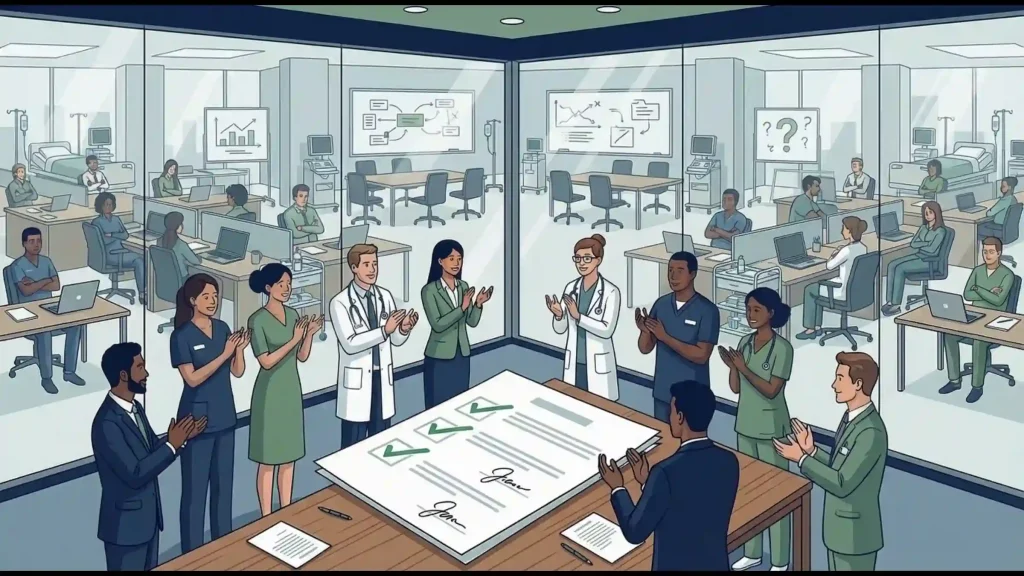
Clear, timely, and two-way communication is essential. Share the rationale for change, expected impacts, and concrete next steps. Use multiple channels—briefings, town halls, written updates, and digital threads—to reach different audiences. Encourage questions and respond honestly; addressing fears and misconceptions quickly reduces resistance and builds credibility.
A simple communication cadence can help: initial announcement (vision and rationale), weekly or biweekly updates for impacted teams (progress and next steps), manager talking points for team discussions, and a feedback channel monitored by the change team. Frame messages around three core points: why we’re changing, what will be different, and what support is available.
How Can Training and Certification Improve Change Readiness?

Targeted training and certification give people the skills and confidence to perform in the new environment. Design learning to match real tasks and provide just-in-time resources. Recognizing completed training—through badges or certificates—reinforces competence and signals readiness across the organization.
Effective learning design includes clear learning objectives tied to daily tasks, hands-on practice (simulations, role plays), quick reference guides, and short refreshers after go-live. Measure training effectiveness with pre/post assessments, behavior demonstrations, and tracking on-the-job performance indicators to ensure learning transfers to work.
What Are 10 Practical Tips to Build Change Readiness Effectively?
To build readiness in a practical, repeatable way, consider this checklist:
- Establish a Change Management Team : Create a cross-functional team to coordinate planning, communications, and execution so efforts stay aligned with organizational goals.
- Conduct Readiness Assessments : Regularly measure where you are—interpret results to target support where it’s needed most.
- Develop a Change Communication Plan : Map audiences, messages, channels, and timing so communications are purposeful and consistent.
- Provide Ongoing Support : Offer coaching, resources, and help desks to keep momentum during and after the transition.
- Encourage Collaboration : Create forums for teams to share lessons, surface issues, and co-create solutions.
- Utilize Change Champions : Empower respected peers to model new behaviors and reinforce messages across teams.
- Implement Feedback Mechanisms : Build regular feedback loops—surveys, focus groups, or quick pulse checks—to course-correct fast.
- Align Change with Organizational Values : Tie initiatives to mission and values so people see how changes support the bigger picture.
- Monitor and Evaluate Progress : Track metrics, review outcomes, and adapt tactics based on what the data shows.
- Celebrate Successes : Publicly acknowledge achievements to sustain motivation and reinforce desired behaviors.
Using this checklist helps you plan change deliberately and adapt as you learn.
For each checklist item, define a short implementation plan: owner, timeline, expected outcome, and a simple success metric. For example, for “Provide Ongoing Support” list the helpdesk hours, coach assignments, and target first-call resolution for issues raised after go-live.
How to Measure and Monitor Change Readiness Progress?
Track clear KPIs that reflect readiness—employee engagement, training completion, feedback sentiment, and progress toward change milestones. Use surveys and qualitative interviews to capture perceptions, and combine that with operational metrics to get a full picture. Regularly review results and update plans so actions remain relevant and effective.
That said, validating the tools you use—especially surveys—can be methodologically challenging and requires careful design and interpretation.
Validating Organizational Readiness to Change Measures
Interest in measuring organizational readiness is high, particularly for implementing evidence-based practices, but several validity challenges exist. Threats such as halo effects and method bias can skew results if not addressed. This protocol describes a comprehensive approach to evaluate the psychometric properties of an existing readiness survey instrument.
Predicting implementation from organizational readiness for change: a study protocol, CD Helfrich, 2011
Example KPIs: survey readiness score (composite), percent of managers trained, training competency pass rate, number of support tickets by category, time-to-resolution, and percent of processes updated. Display KPIs on a simple dashboard with traffic-light indicators and trend lines so leaders can see improvements or emerging risks at a glance.
| Assessment Tool | Purpose | Effectiveness |
|---|---|---|
| Employee Surveys | Gauge employee perceptions of change | High |
| Readiness Assessments | Identify strengths and weaknesses | Medium |
| Feedback Mechanisms | Gather input for continuous improvement | High |
The table highlights common assessment approaches and their relative strengths; combining methods usually gives the most reliable view of readiness.
In practice, schedule a baseline assessment before design, a readiness check before pilot or go-live, and a post-implementation follow-up to measure sustainment. Frequent, short pulse checks between these milestones help you course-correct quickly.
What Case Studies Demonstrate Successful Change Readiness?
Real-world examples show the payoff of investing in readiness. Company A used a structured change framework and broad employee engagement to guide a major restructuring, resulting in smoother transitions and fewer setbacks. Company B prioritized transparent communications to address concerns, which increased buy-in and reduced resistance. These examples underscore that planning, engagement, and consistent execution drive successful change.
In Company A’s approach, leaders ran a baseline readiness assessment, prioritized three high-impact interventions (manager coaching, role clarification, and systems updates), and tracked adoption with simple operational metrics. They used change champions to pilot new processes in two teams before scaling, which exposed practical issues early and reduced rework at rollout.
Company B focused on communication and listening: they launched an executive-led town hall, distributed manager talking points, and created an anonymous feedback channel monitored by the program team. That combination surfaced common concerns, allowed targeted FAQs and training sessions to be created, and measurably improved sentiment ahead of go-live.
Frequently Asked Questions
What are the common challenges organizations face in achieving change readiness?
Common hurdles include resistance to change, unclear communication, gaps in training, and uneven leadership commitment. Addressing these areas with targeted interventions—clear messaging, robust training, and visible leadership—helps overcome those obstacles.
How can organizations create a culture that supports change readiness?
Build a culture that values flexibility and learning: recognize employees who try new approaches, reward cross-team collaboration, and have leaders model adaptive behaviors. Regularly solicit input and act on it so people see that change is a shared, supported effort.
What role does employee feedback play in enhancing change readiness?
Feedback is essential. It reveals how people are experiencing change, surfaces practical barriers, and generates suggestions for improvement. When feedback leads to visible action, it increases trust and commitment.
How can organizations measure the effectiveness of their change readiness strategies?
Use a mix of quantitative and qualitative measures: engagement scores, training completion rates, feedback sentiment, and progress against milestones. Regular evaluation and adjustment based on those metrics help you refine your approach.
What are some examples of successful change readiness initiatives?
Successful initiatives combine clear plans, active stakeholder engagement, practical training, and strong leadership. Examples include organizations that implemented structured change management programs and those that used targeted communications to reduce friction—both approaches delivered stronger adoption and better outcomes.
How can technology facilitate change readiness in organizations?
Technology speeds communication, centralizes documentation, and supports learning—project management tools, collaboration platforms, and e-learning make it easier for teams to stay aligned and access resources when they need them. Used thoughtfully, tech reduces friction and supports faster adoption.
Conclusion
Building change readiness is a practical investment: clearer communication, stakeholder engagement, focused training, and visible leadership all reduce risk and improve the odds of success. Use assessments and feedback to guide your actions, and treat readiness as an ongoing capability—not a one-time task. Explore these approaches to strengthen your organization’s ability to adapt and deliver results.
Next steps: run a short readiness check, create a one-page action plan with owners and timelines, schedule manager briefings, and pick two quick wins to build momentum. Treat readiness as measurable work and assign accountability—small, consistent improvements compound into reliable change capability.
