

What Is CCMP Certification Training and Why It Matters
CCMP (Certified Change Management Professional) certification training prepares practitioners to lead and manage organizational change with confidence. The program combines core principles, proven methodologies, and practical tools so participants can design, deliver, and sustain change initiatives. As organizations place greater value on change capability, CCMP has become a respected credential for professionals looking to advance their careers. This article outlines the training’s purpose, structure, and benefits, and explains why CCMP matters in today’s change-driven environment.
What Is CCMP Certification Training?
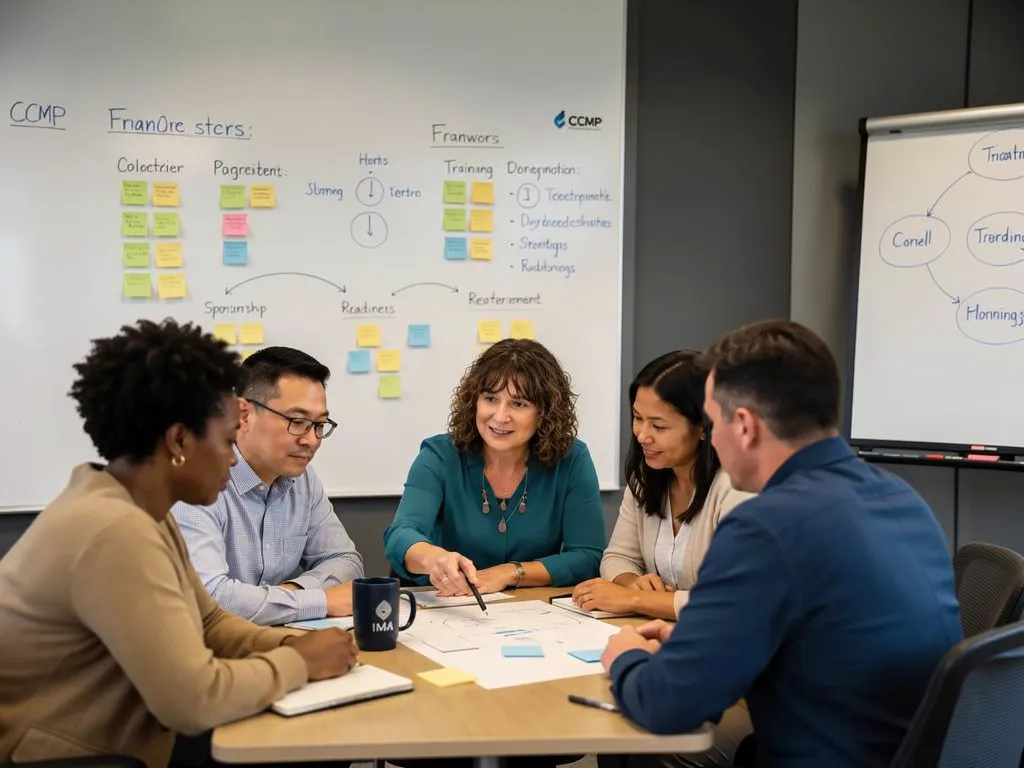
CCMP certification training is a structured program that builds the competencies needed for effective change management. It covers a range of frameworks and approaches, giving practitioners both the conceptual foundation and hands-on techniques required to guide change from planning through adoption. The curriculum is organized to help learners apply concepts in real-world situations and measure impact.
Training objectives
The primary goals of CCMP certification training are to:
- Build Practical Skills: Give participants hands-on experience managing change processes and tools.
- Teach Proven Frameworks: Introduce established models that improve planning and execution.
- Strengthen Resilience: Help professionals and teams adapt and succeed in dynamic organizational contexts.
Program structure
CCMP training is typically modular and designed to cover essential areas of practice. Common elements include:
- Program Duration: Most courses run over several weeks to allow deep exploration of topics.
- Delivery Formats: Training is available online, in person, or as a hybrid to suit different learning needs.
- Learning Tracks: Options often vary by experience level, from foundational to advanced practice.
Benefits for change management professionals
Earning CCMP certification delivers tangible advantages for practitioners. Key benefits include:
- Professional Credibility: A recognized credential that increases trust with employers and stakeholders.
- ACMP QEP Credits: Credits that support ongoing professional development and recertification.
- Applied Learning: Emphasis on real-world practice so skills translate directly to projects.
| Benefit | Description | Value |
|---|---|---|
| Professional Credibility | Global recognition of your expertise | High |
| ACMP QEP Credits | Credits that support continuing education | Medium |
| Applied Learning | Practical skills for real-world projects | High |
CCMP vs. Prosci, APMG, and AIM: Quick Comparison
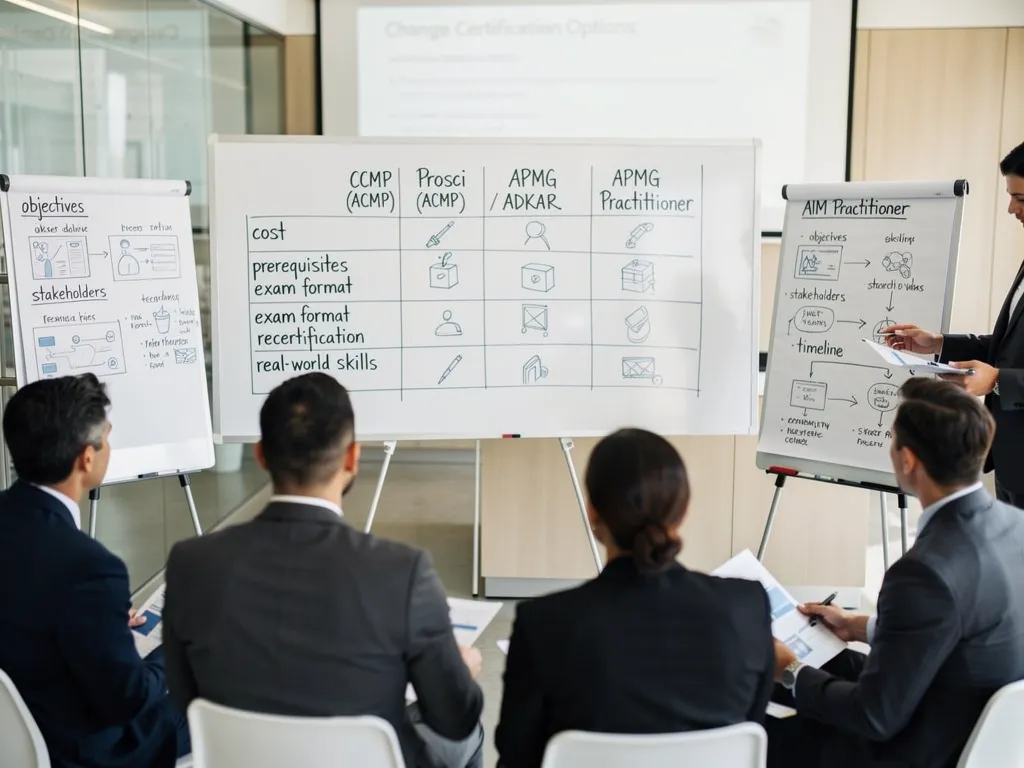
Four credentials dominate the change management certification market. They differ on cost, prerequisites, exam format, recertification, and what they actually prepare you to do. Use the table below to identify which fits your situation.
| Dimension | CCMP (ACMP) | Prosci / ADKAR | APMG Change Management Practitioner | AIM Practitioner (IMA Worldwide) |
|---|---|---|---|---|
| Issuing body | Association of Change Management Professionals (ACMP) | Prosci | APMG International | IMA Worldwide (3 programs ACMP QEP-approved as CCMP prep) |
| Cost (typical USD) | ~$575 application + exam fee (ACMP member rate) | $4,500 (3-day program, includes materials) | ~$4,400 to $5,000 (Foundation + Practitioner via accredited training provider) | Enterprise pricing, sales-led. Contact IMA Worldwide. |
| Duration | Self-paced study, scheduled exam | 3-day intensive (in-person or virtual) | Foundation + Practitioner course track (5+ days) | Cohort-based, varies by program |
| Prerequisites | Documented change management experience required (per ACMP application guide) | None for initial certification | Foundation level required before Practitioner | Introduction to AIM before AIM Pracitioner |
| Exam format | 150-question multiple choice, proctored | In-class assessment during the 3-day program | Multiple choice (Foundation) plus objective testing (Practitioner) | Practitioner certification awarded on program completion |
| Recertification | 60 PDUs every 3 years, plus recertification fee | None required after initial certification | Re-registration exam between years 3 and 5; full Practitioner exam after year 5 | Recertification every 3 years. |
| Employer recognition | ACMP-issued credential, internationally recognized | Widely recognized in North American enterprise | Strong in UK, Europe, and APMG-aligned markets | Applied across IMA’s Fortune 500 client base in healthcare, financial services, hyperscale technology, transportation, and consumer goods |
| Best fit for | Practitioners seeking a vendor-neutral, association-issued credential | Individuals new to change management; broad ADKAR exposure | UK and EU markets; PRINCE2 / ITIL-adjacent practitioners | Enterprise change leaders wanting AIM methodology fluency plus an ACMP QEP-approved CCMP preparation pathway |
Verify cost and exam details directly with each issuing body before enrolling. IMA Worldwide is an ACMP QEP-approved provider for three CCMP preparation programs.
How AIM Practitioner Certification Prepares You for the CCMP Exam

Three of IMA Worldwide’s AIM training programs earned ACMP QEP (Qualified Education Provider) designation, meaning ACMP has approved these AIM programs as preparation pathways for the CCMP exam. ACMP issues the credential. IMA delivers the methodology that prepares you for it.
AIM (Accelerating Implementation Methodology), developed by Don Harrison in 1989, is built on 37+ years of field research. AIM codifies six non-delegable sponsor tasks, the EMR framework (Express, Model, Reinforce), and four scored diagnostic instruments hosted on the Comparative Agility platform: IHA (Implementation History Assessment), IRA (Individual Readiness Assessment), TRI (Targeted Reinforcement Index), and IRF (Implementation Risk Forecast). These constructs map directly to the CCMP body of knowledge.
What you get with AIM Practitioner Certification:
- Field-tested methodology used by Fortune 500 organizations since 1989
- Access to the four scored diagnostic instruments via Comparative Agility
- Practitioner-led instruction by AIM Master Practitioners
- ACMP QEP-approved curriculum that maps to the CCMP exam
- A methodology you apply on every transformation engagement after the exam, not just preparation content for the test
**Learn more about AIM Practitioner Certification** or contact IMA Worldwide for enterprise cohort delivery.
Register for AIM Practitioner Certification in Portland
Practitioners who want a methodology that carries past the exam can enroll directly in the next AIM Practitioner Certification class. Register for the Portland AIM Practitioner Certification class here to secure a seat and gain direct access to AIM Master Practitioners and the diagnostic instruments described above.
Who issues the CCMP certification and what is its purpose?

The Association of Change Management Professionals (ACMP) issues the CCMP credential. Its purpose is to validate the knowledge and capabilities of change practitioners against industry standards, raising professional accountability and improving the odds of successful change outcomes across organizations.
What are the key components of the CCMP training program?

CCMP training covers the essential components practitioners need to plan and execute change effectively. Those components typically include:
- Course Design: A clear curriculum that addresses core change management domains and competencies.
- Core Topics: Areas such as stakeholder engagement, communication planning, and resistance management.
- Learning Outcomes: Graduates can lead change initiatives, measure progress, and embed sustainable adoption.
How Does CCMP Certification Benefit Your Change Management Career?

CCMP certification can enhance career prospects by signaling expertise and commitment to employers and clients. Typical benefits include:
- Advancement Opportunities: Certified professionals are often strong candidates for senior roles and leadership positions.
- Skill Development: Training sharpens practical and strategic abilities valued in the job market.
- Industry Recognition: A credential that helps you stand out in a competitive field.
For professionals aiming to grow their impact, CCMP provides a solid foundation in the principles and practices that drive successful change.
What career advancement opportunities does CCMP certification unlock?

CCMP opens doors to roles and opportunities across organizations, including:
- Typical Roles: Positions such as Change Manager, Organizational Development Consultant, and Project Manager.
- Salary Potential: Certified practitioners frequently command higher compensation than non-certified peers.
- Competitive Edge: Certification can differentiate you during hiring and promotion decisions.
Which change management frameworks are included in the CCMP curriculum?

CCMP training typically introduces several widely used methodologies, including:
- Kotter’s 8-Step Process: A well-known framework for leading organizational change.
- ADKAR Model: A people-centered model that focuses on individual steps to adoption.
- Bridges’ Transition Model: A framework that highlights the psychological transitions people experience during change.
- Lewin’s Change Management Model: A foundational model describing the stages of change.
- McKinsey 7-S Framework: A tool for aligning seven organizational elements to support change.
- The Change Curve: A model that maps the emotional journey individuals experience during change.
Familiarity with these models equips practitioners to design approaches that address both organizational systems and the human factors that determine success.
Research has demonstrated practical applications of these models. For example, studies that evaluate Kotter’s approach in industry settings:
Assessing Organizational Change with Kotter’s 8-Step Model This study evaluated the change process at a mining company using Kotter’s 8-step model. It examined how change readiness factors, such as job satisfaction, uncertainty, and organizational commitment, related to employees’ perceptions of the change. The research used a quantitative descriptive survey design and sampled 134 of 192 employees through stratified sampling across operations, support, and organizational design groups. Primary data were collected via questionnaires from stakeholders in various roles. The findings showed that roughly 78 percent of respondents supported the conclusion tied to step 8 of Kotter’s model, indicating perceived benefits from the completed change process. Change management process in a mining company: Kotter’s 8-step change model, 2021
How does understanding methodologies improve organizational change skills?

Deep knowledge of change methodologies strengthens organizational change capability by:
- Enabling Practical Application: Practitioners can translate frameworks into project-ready actions that drive results.
- Building Readiness: Methodologies help organizations prepare systems and people for change.
- Reducing Resistance: Familiar approaches give leaders tools to identify and address resistance more effectively.
How Can You Prepare Effectively for the CCMP Exam?

Preparing for the CCMP exam is most effective when you combine structured study with practical experience. Recommended steps include:
- Use Official Resources: Study ACMP materials and instructor-recommended textbooks and guides.
- Follow a Study Plan: Create a schedule that covers each module and reserves time for practice questions.
- Practice Actively: Join study groups, work through sample exams, and apply concepts to real or simulated projects.
- Enroll in an ACMP QEP-approved program: IMA Worldwide’s AIM Practitioner Certification is one of three IMA programs ACMP has approved as a CCMP preparation pathway.
For deeper detail on eligibility requirements, see CCMP Certification Requirements: Who Can Apply. For format-specific guidance, see Online vs In-Person CCMP Training and CCMP Exam Preparation Tips.
Frequently Asked Questions
What prerequisites are needed for CCMP certification training?
Most candidates benefit from a basic understanding of change management principles, though strict prerequisites vary by provider. Prior experience in project management, organizational development, or related fields is helpful. Some providers recommend introductory courses to ensure participants arrive prepared for advanced topics covered in CCMP.
How long does it take to complete the CCMP certification training?
Course length depends on the provider and delivery format. Many programs run over several weeks and combine live instruction, self-paced study, and practical exercises. Plan to spend about 30 to 40 hours preparing, including class time and study, though exact timelines differ by program.
Are there any continuing education requirements after obtaining CCMP certification?
Yes. To maintain CCMP status, certified professionals must earn ACMP QEP credits over a defined recertification period (commonly every three years). Ongoing learning through workshops, seminars, and additional training helps keep skills current and fulfills continuing education obligations.
What types of roles can benefit from CCMP certification?
CCMP is valuable across many roles: Change Managers, Project Managers, Organizational Development Consultants, HR specialists, and leaders involved in strategic change all gain practical tools and credibility from the certification. The skills also benefit anyone responsible for driving adoption and organizational transformation.
Can CCMP certification be pursued online?
Yes. Many reputable providers offer fully online or hybrid CCMP programs that combine recorded lessons, live webinars, and interactive exercises. Online options are convenient for busy professionals, but choose a provider that offers robust support and validated learning materials.
What is the cost of CCMP certification training?
Prices vary by provider, format, and included resources. The ACMP application fee is approximately $575 for members. Preparation programs (including ACMP QEP-approved providers like IMA Worldwide) typically range from $1,500 to $5,000 and often include course materials, online access, and exam-related costs. When budgeting, account for potential travel, time, and supplementary study materials.
How does CCMP certification impact job prospects in change management?
CCMP certification strengthens job prospects by demonstrating subject-matter competence and professional commitment. Certified individuals often have access to higher-level opportunities and can be more competitive in hiring and promotion processes. The practical skills gained also increase effectiveness in leading change, which employers value.
Is AIM certification a CCMP preparation pathway?
Yes. Three of IMA Worldwide’s AIM training programs earned ACMP QEP (Qualified Education Provider) designation, meaning ACMP has approved them as preparation pathways for the CCMP exam. AIM delivers the methodology; ACMP issues the credential. See AIM Practitioner Certification for enrollment details.
The Bottom Line

CCMP certification training equips change practitioners with the knowledge, frameworks, and applied skills needed to lead successful organizational transformations. The credential enhances professional credibility, supports career growth, and emphasizes practical application so change initiatives deliver measurable results. For practitioners who want a methodology to apply on every engagement (not only preparation content for the exam), an ACMP QEP-approved program like AIM Practitioner Certification from IMA Worldwide pairs CCMP credentialing with a field-tested implementation methodology used since 1989.
Is the Benefit You Need a Credential, or a Capability?

Most of the benefits above come from what the credential signals. There is a second kind of benefit: what you can actually do differently on the next change. Our CCMP vs AIM certification comparison sets the two side by side, including how ACMP QEP pre-qualified training hours fit into a CCMP application. If the capability matters more right now, AIM Practitioner Certification is earned by applying the methodology to a live initiative, not by passing an exam.
Ready to Build Real Change Capability?
Seats are open for the next AIM Practitioner Certification class. Register for the Portland AIM Practitioner Certification class here to gain the methodology, diagnostic tools, and Master Practitioner instruction that carry into every transformation engagement after the exam.
