

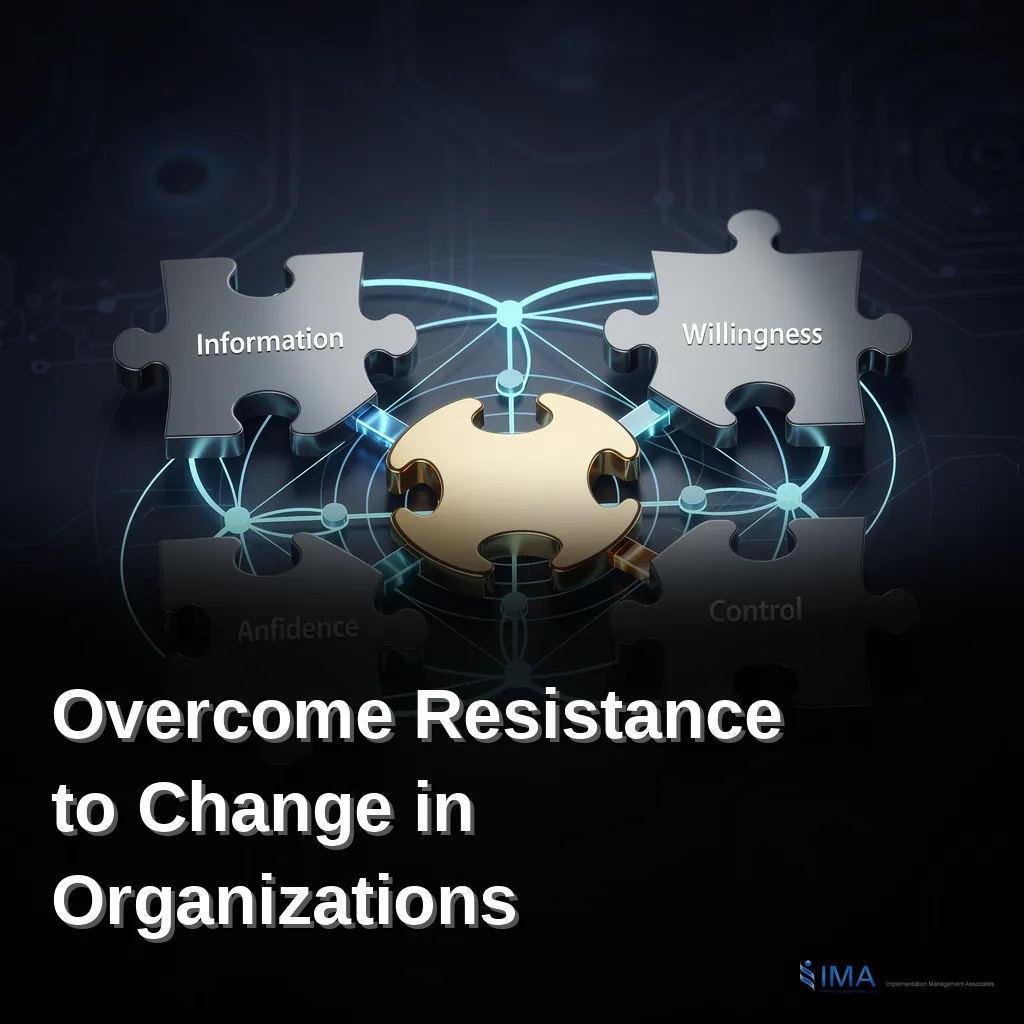
Resistance to change frequently originates from entrenched employee concerns and organisational cultural dynamics. Effectively managing resistance to change is a prerequisite for successful change delivery. This article analyzes proven change management strategies with particular emphasis on the AIM methodology, a structured framework for mitigating resistance. It thoroughly examines primary causes, leadership responsibilities, communication protocols, and measurement approaches so organisations can achieve sustained adoption and measurable outcomes. This comprehensive guide focuses on overcoming change resistance in organizations by integrating expert insights and practical tools in a cohesive and practical manner.
What Are the Primary Causes of Resistance to Change in Organizations?

Resistance typically emerges from a combination of individual and systemic factors: employee concerns, organizational culture, and leadership dynamics. Common drivers include disruption of established reference frames, fear of the unknown, and insufficient trust in leadership. Persisting incentives for legacy behaviors further reduce adoption rates. Gartner reports that 50% of change management initiatives fail due to employee resistance, making proactive resistance management a critical organizational capability. Identifying these causes enables targeted interventions that address both emotional and structural barriers to change.
Root causes often include uncertainty about job security, perceived loss of control, and inadequate communication. Organizations with rigid cultures or those lacking a history of successful change are particularly vulnerable. Addressing these root causes requires a diagnostic approach, such as the AIM methodology, which Peacock Hill and IMA Worldwide advocate for its evidence-based, continuous feedback mechanisms. This approach ensures that interventions are tailored to the specific resistance factors present in the organization.
How Do Employee Concerns and Organizational Culture Influence Resistance?
Employee concerns materially affect change uptake. Trust in leadership is a primary determinant; low transparency or perceived lack of support correlates with higher resistance. Job-security anxieties also suppress adoption. Organizational culture moderates these effects: cultures oriented to innovation and adaptability exhibit higher acceptance, whereas stability-focused cultures resist change. Cultivating trust and structured communication reduces resistance and improves response to initiatives.
Empirical evidence indicates that diagnostic attention to both individual and situational factors is necessary to design effective mitigation strategies.
Overcoming Resistance to Change: Causes & Strategies This literature review systematically examines factors that cause resistance to change and identifies strategies that mitigate that resistance based on aggregated journal research. The review highlights individual factors such as low motivation and situational factors such as job-security concerns; it also identifies seven strategies to overcome resistance, including increased participation. Resistance to change: Causes and strategies as an organizational challenge, S Azizah, 2020
What Role Does Leadership Alignment Play in Resistance?
Leadership alignment is a critical determinant of change success. Visible, consistent leader involvement reinforces the strategic priority of the initiative and increases employee support. Case studies demonstrate that aligned leadership correlates with smoother transitions and higher engagement. Alignment reduces resistance and creates a shared purpose that facilitates adoption.
How Does the AIM Methodology Address Resistance to Change Effectively?
The AIM methodology applies a structured, diagnostic approach that targets root causes rather than attempting to eliminate resistance outright. It operationalises a continuous diagnostic cycle to adapt interventions using real-time feedback. By reinforcing desired behaviours and addressing emergent concerns, AIM strengthens organisational resilience and supports sustained adoption. This methodology, championed by IMA Worldwide and implemented by Peacock Hill, integrates validated tools and leadership accountability to ensure measurable success in overcoming resistance.
The AIM methodology’s strength lies in its ability to provide a dynamic framework that evolves with the organisation’s needs. It does not treat resistance as a static obstacle but as a signal for targeted action. This approach aligns with best practices in change readiness resources, emphasizing continuous engagement and adaptation.
What Are the Core Components of the AIM Methodology?
The AIM methodology comprises several core components engineered to enable effective change delivery. These components provide the governance, reinforcement, and measurement capabilities required for predictable adoption.
Leadership Involvement : Ensuring that leaders are actively engaged in driving change and supporting their teams throughout the process.
Reinforcement Architecture : Creating systems that reward and reinforce desired behaviors, making it easier for employees to adopt new practices.
Validated Diagnostic Tools : Utilizing tools that provide insights into employee sentiments and organizational readiness, allowing for timely adjustments to change strategies.
These elements function collectively to form a comprehensive framework that mitigates resistance and facilitates effective implementation. Organisations leveraging this structured approach report higher rates of adoption and improved alignment between change objectives and employee behaviors.
How Does AIM Deliver Measurable Change Management Results?
AIM produces measurable outcomes by embedding accountability and continuous improvement into change programmes. Organisations that apply AIM report improved on-time initiative delivery, adherence to budgets, and attainment of both technical and business objectives. Clear metrics and regular progress assessments ensure interventions remain effective and sustainable over time.
What Leadership Roles and Sponsorship Techniques Facilitate Successful Change?
Effective leadership is essential for delivering change. Leaders must sponsor initiatives actively and demonstrate commitment through visible actions. Such sponsorship builds trust and increases employee engagement, improving the probability of successful adoption. Peacock Hill’s consulting services emphasize the critical role of leadership alignment and sponsorship in overcoming organizational resistance.
How Can Change Leaders Influence Employee Engagement and Adoption?
Change leaders influence engagement by involving employees in the process and creating mechanisms for feedback and recognition. Soliciting input, acknowledging contributions, and providing targeted development opportunities increase buy-in. Establishing a continuous-improvement mindset where employees feel heard supports positive attitudes toward change.
What Are Best Practices for Project Sponsors in Managing Change?
Project sponsors perform a strategic governance role in change management. Their responsibilities include clarifying objectives, maintaining stakeholder alignment, and ensuring resource availability.
Clear Role Understanding : Sponsors should have a well-defined understanding of their responsibilities and the change objectives.
Active Engagement : Regularly interacting with teams and stakeholders to provide support and address concerns.
Effective Contracting : Establishing clear agreements on expectations and outcomes to ensure alignment among all parties involved.
Adherence to these practices enables sponsors to navigate complexity, reduce resistance, and sustain momentum.
Which Communication Strategies Reduce Employee Resistance During Change Initiatives?

Precise, transparent communication is fundamental to reducing resistance. Organisations should implement communication strategies that prioritise clarity, frequency, and alignment with leadership actions throughout the change lifecycle.
How Should Organizations Tailor Messaging to Different Stakeholders?
Messaging must be segmented to address stakeholder-specific needs. Frontline personnel require operational guidance on task impacts, while executives need strategic implications and metrics. Tailored content that addresses distinct concerns improves relevance and acceptance.
What Are Effective Channels and Timing for Change Communication?
A multi-channel communication approach increases reach and comprehension. Use a combination of emails, meetings, and digital collaboration platforms and provide regular status updates. Timing should align with key milestones and visible leadership actions to reinforce commitment and reduce uncertainty.
How Can Organizations Measure and Monitor Change Implementation Success?

Systematic measurement and monitoring are necessary to evaluate change effectiveness. Organisations should define metrics that track progress, surface issues, and guide corrective actions.
What Key Performance Indicators Demonstrate Change Adoption?
Key performance indicators for adoption typically include:
Observable Behaviors : Tracking changes in employee behaviors that align with new practices.
Leadership Involvement : Assessing the level of engagement and support from leadership throughout the change process.
Reinforcement Systems : Evaluating the effectiveness of systems in place to reward and reinforce desired behaviors.
Monitoring these KPIs yields actionable insights into adoption levels and identifies where tactical adjustments are required.
How Does Continuous Monitoring Support Sustainable Organizational Transformation?
Continuous monitoring, implemented via feedback loops and periodic assessments, enables organisations to detect behavior shifts, verify compliance, and execute timely interventions. This approach preserves momentum and supports long-term sustainment of change benefits.
What Case Studies Demonstrate the Effectiveness of AIM Methodology in Overcoming Resistance?

Case studies provide empirical evidence of the AIM methodology’s effectiveness in addressing resistance. Analysing real-world applications allows organisations to replicate proven practices and adapt lessons to their contexts.
Which Organizations Have Achieved Measurable Results Using AIM?
Multiple organisations have reported measurable improvements following AIM implementation. For example, a multi-site health system recorded marked gains in employee engagement and operational efficiency. A healthcare IT organisation documented improved project delivery timelines and stronger budget adherence. These cases illustrate AIM’s applicability across diverse operational environments.
What Lessons Can Be Learned from AIM Implementation Challenges?
Implementation challenges highlight several lessons: secure sustained leadership engagement, conduct thorough readiness assessments, and deploy reinforcement systems to maintain behaviour change. Organisations that address these factors proactively increase the likelihood of successful outcomes.
The AIM Leadership Reinforcement Model: Where Sponsor Effort Actually Pays Off

Not every leadership action carries the same weight in a change effort. The Accelerating Implementation Methodology (AIM), developed by Don Harrison at IMA Worldwide, maps six non-delegable sponsor tasks to the Express, Model, Reinforce (EMR) framework. Reinforcement actions carry roughly three times the weight of early communication, which is why sponsors who stop at the announcement stage rarely see adoption hold.
How Is AIM Different From Kotter, ADKAR, and Lewin?

Most change frameworks describe what should happen. AIM measures whether it is happening. Kotter’s eight steps (John Kotter, Leading Change, 1996) build urgency and momentum, ADKAR (Jeff Hiatt, Prosci) tracks an individual from Awareness through Reinforcement, and Lewin frames change as Unfreeze, Change, Refreeze. AIM shares those goals but adds scored diagnostics, sponsor accountability, and a hard distinction between installation, when the system goes live, and implementation, when people actually adopt it. For a side-by-side view, see our comparison of AIM vs Prosci vs Kotter.
The stakes are well documented. McKinsey & Company reports that roughly 70 percent of large-scale change programs fail to reach their stated goals, most often because organizations underinvest in the people side of adoption rather than the technical rollout.
Five Diagnostic Questions That Locate the Real Source of Resistance

The Accelerating Implementation Methodology (AIM) treats resistance as a signal, not a personality trait. Before pushing harder on communication, locate which of the five target readiness elements is actually missing. Each element maps to a question the target is silently asking.
Information: Do I know what is expected of me?
Willingness: Do I want to do this?
Ability: Do I know how to do this?
Confidence: Do I believe this will work?
Control: Did I have any say in this?
The first three elements are foundational and the last two are contextual, but all five must be present before resistance gives way to genuine adoption. Targeting the missing element, rather than repeating the message, is what moves a resistant person forward.
Overcoming Resistance to Change Management: A Step-by-Step Mitigation Checklist
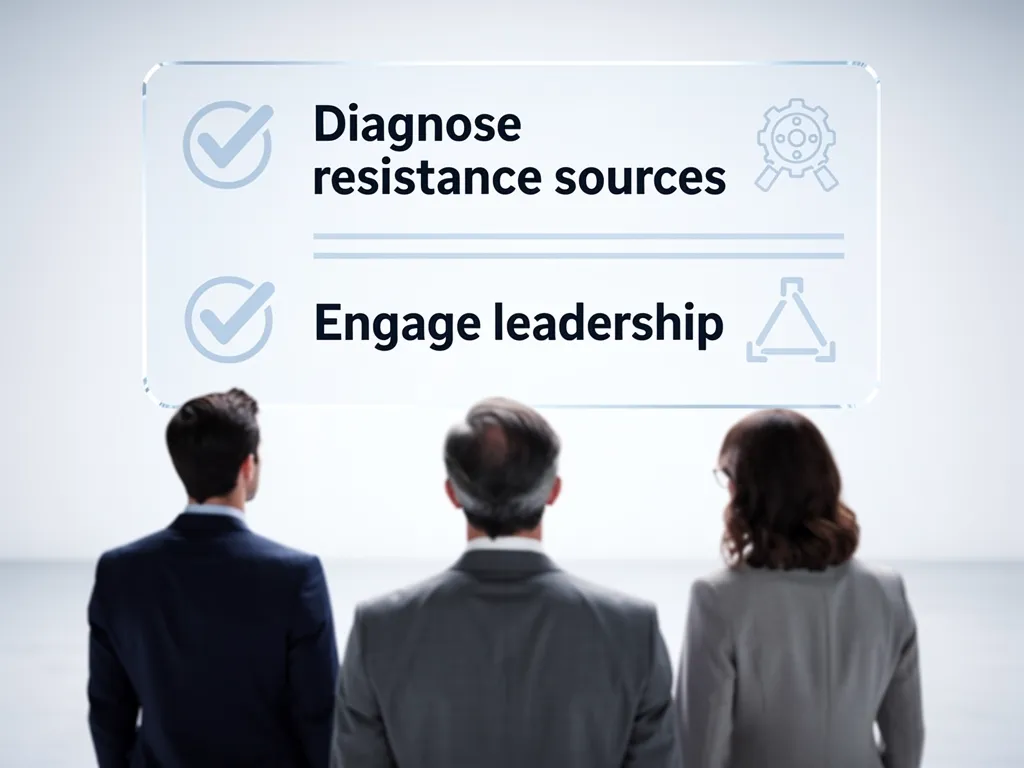
Effectively overcoming resistance to change requires a clear, systematic approach. The following step-by-step mitigation checklist provides actionable guidance to navigate and reduce resistance throughout change initiatives.
Diagnose Resistance Sources: Use surveys, interviews, and observation to identify specific causes of resistance within your organization.
Engage Leadership: Ensure leaders are visibly committed and aligned with change objectives to build trust and set a clear direction.
Communicate Transparently: Provide clear, frequent updates tailored to different stakeholder groups to address concerns and reduce uncertainty.
Involve Employees: Encourage participation and feedback early to increase ownership and willingness to adopt change.
Develop Reinforcement Systems: Align rewards and recognition to promote desired behaviors and sustain momentum.
Deploy Ongoing Training: Equip employees with necessary skills and knowledge to confidently implement changes.
Monitor Progress Continuously: Use diagnostic tools to track adoption rates and adjust strategies in real time.
Address Barriers Promptly: Respond to emerging concerns and obstacles with targeted interventions.
Celebrate Successes: Highlight positive outcomes and recognize contributions to reinforce commitment and morale.
Ensure Long-Term Sustainment: Integrate changes into organizational culture and practices through continuous monitoring and leadership support.
To help assess your organization’s current level of resistance and readiness, use the interactive diagnostic checklist below. Mark each checkbox that reflects your organization’s situation.
Organizational Resistance Assessment:
Employees have clear information about change expectations [ ]
Employees show willingness to embrace change [ ]
Employees possess the ability and skills needed for change [ ]
Employees have confidence in the change outcomes [ ]
Employees feel they have some control or input in the change process [ ]
Organizations scoring low on one or more of these areas should prioritize targeted actions to address the gaps. This checklist serves as a practical tool to focus efforts and measure progress in overcoming resistance to change.
Frequently Asked Questions
What is the most effective way to overcome resistance to change?
The most effective approach treats resistance as data rather than defiance. AIM builds readiness across five elements: information, willingness, ability, confidence, and control. Addressing the specific element a person is missing, rather than pushing harder on the message, is what converts resistance into adoption.
What is the difference between installation and implementation?
Installation is the point at which a new system, process, or structure is technically in place. Implementation is when people change their behavior and use it as intended. AIM treats the gap between the two as the central risk in any change effort.
How long does it take for a change to stick?
Adoption is most at risk in the first 90 days after go-live, when old habits compete with new expectations. Without deliberate reinforcement during that window, early gains fade regardless of how well the change was communicated at launch.
About This Guidance

This guidance draws on the Accelerating Implementation Methodology (AIM), created by Don Harrison and refined across 40+ years of implementation research at IMA Worldwide. It is curated by Ann Marvin, founder of Peacock Hill Consulting and Chief of AI Tools at IMA Worldwide, who leads the firm’s AI-enabled change tooling. Learn more about Ann Marvin.
Where Will Resistance Hit Your Next Change First?
Resistance is data, and it can be measured before go-live rather than discovered afterward. The change readiness assessment shows how AIM scores an initiative on the dimensions this article describes, so you can see which target groups are ready, which are not, and why, while there is still time to act on it. For the structural view of why people push back in the first place, start with our guide to resistance to change.
