

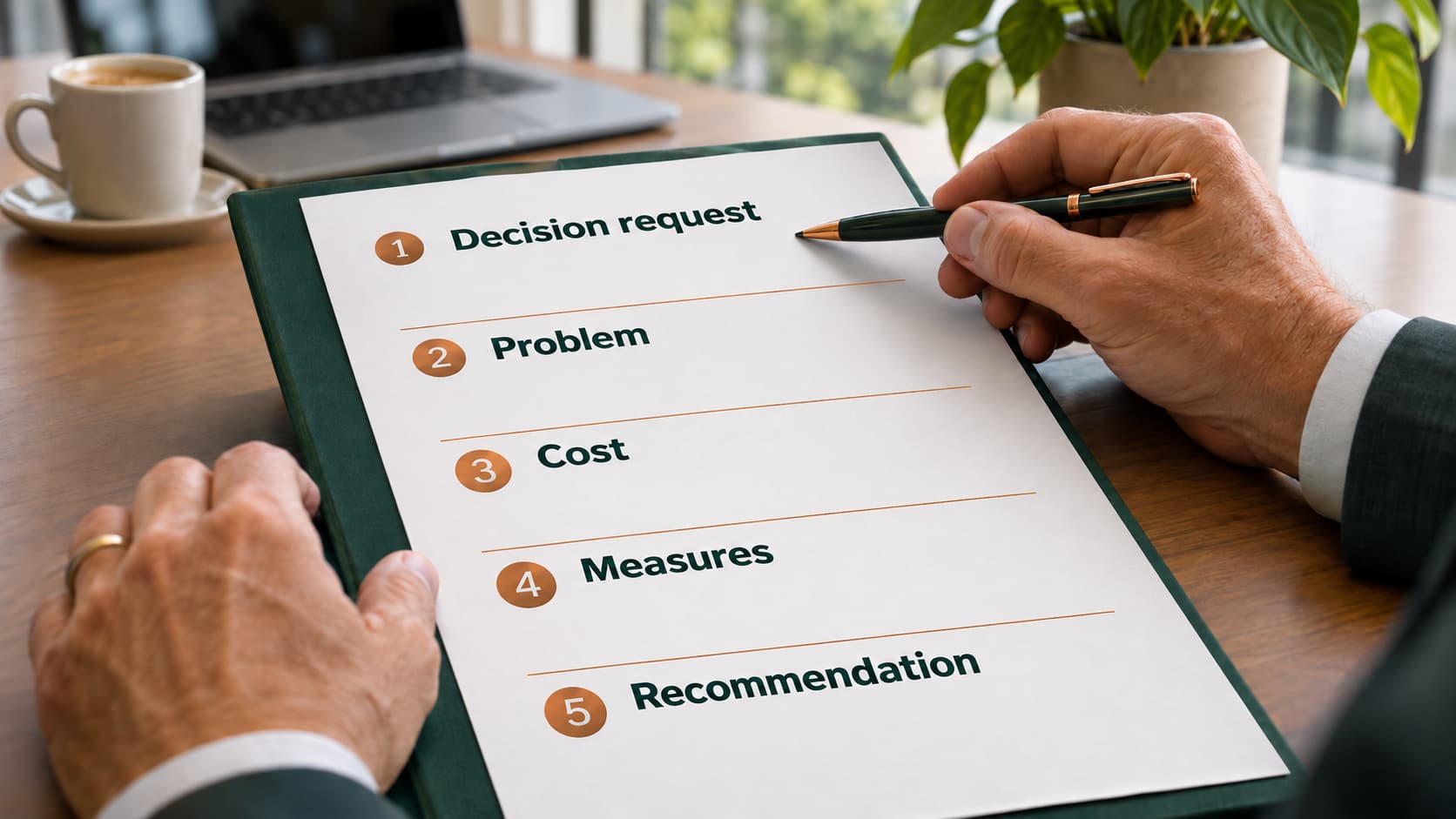
A business case for change management training is a decision document that asks for budget to train specific people to lead a change. It sets the full cost of that training against the adoption problem it is meant to solve and names the behavior and business measures that will show whether the investment worked. For approval, the case connects a named initiative, a defined group of trainees, the full cost, baseline measures, and a clear decision request.
At IMA Worldwide, we teach AIM (Accelerating Implementation Methodology), our change management method, and we draw on it below, although the outline works whichever training provider you choose.
Key Takeaways
- Include program fees, participant time, and reinforcement after the program in the full cost, because the fee alone understates the spend.
- Start with the adoption problem and its baseline before you describe the training.
- Report completion, behavior, adoption, and business result as separate levels, so an early result is not mistaken for the final one.
- Treat an ROI calculation as one section within a wider approval document.
What Does a Business Case for Change Management Training Need to Show?
A business case for change management training needs to show the approver the decision and the adoption problem the money will address. Write those two answers first, then build the cost model and measurement plan.
What Decision Is the Approver Being Asked to Make?
The decision the approver is being asked to make is whether to fund a named program for a defined group of people, at a stated amount, by a stated date. Put it at the top of the document.
Which Change and Behavior Problem Will Training Address?
The change and behavior problem that training will address is the gap between what a live initiative needs people to do and what they are doing now. Name the initiative, the roles it affects, and the missing behaviors, such as supervisors approving schedules in the new system. Describe each one the way AIM defines observable behavior, as an action visible to others that can be measured, because the same behaviors become the measures you report after training.
How Do You Define the Adoption Problem and Its Cost?
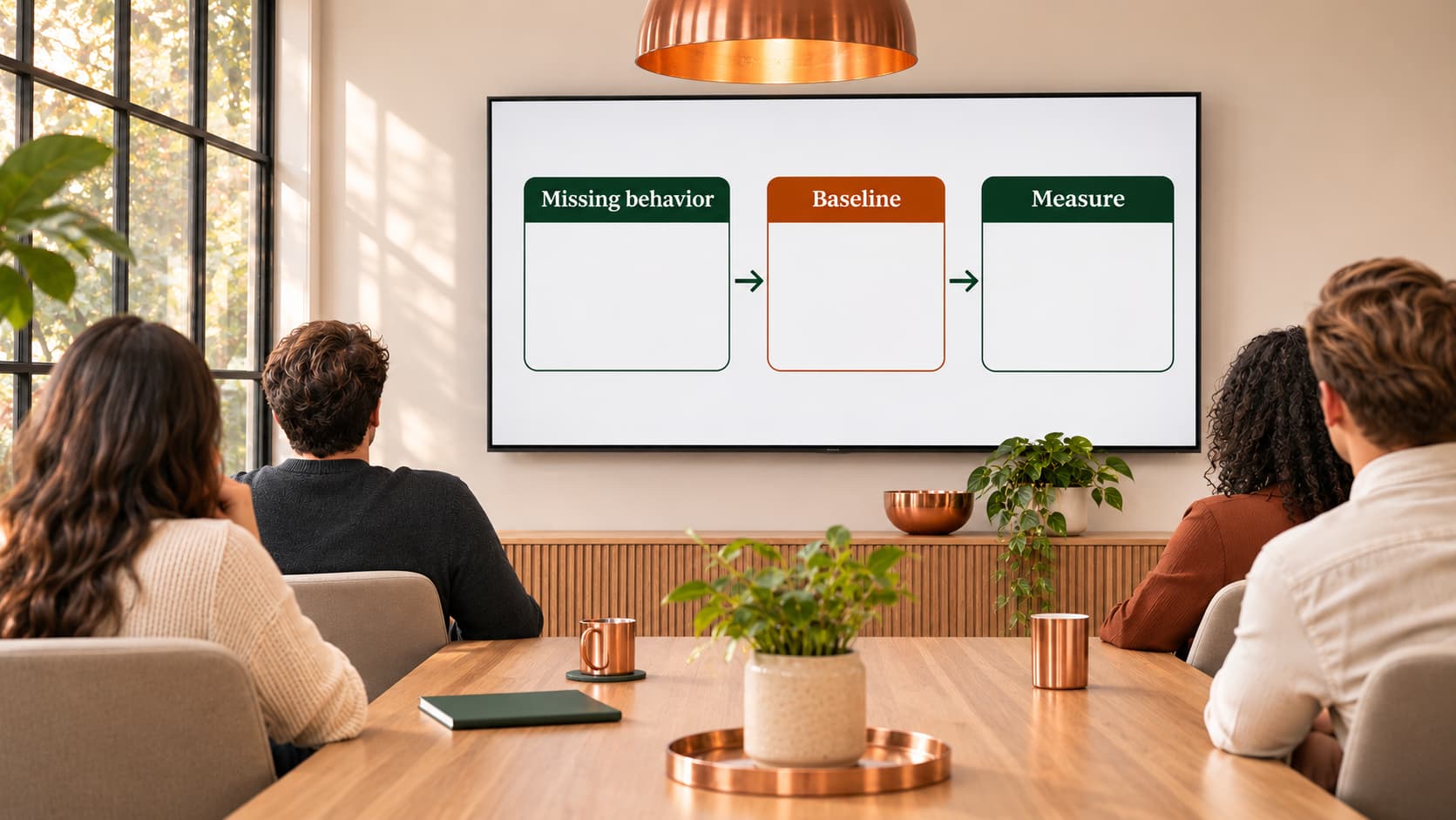
Defining the adoption problem means recording where the initiative stands today and then estimating what the organization loses while the missing behaviors stay missing. Together, the baseline and the cost of the stall tie the change management training investment to a measured problem that the approver can check.
What Should the Baseline Include?
A baseline for a change management training business case should include the starting value of every measure you plan to report later, recorded before anyone is trained. Capture adoption signals such as system usage and workarounds, the behaviors you named, the number of people affected in each role, and the business measures the initiative was approved to move. If the initiative already has Human Objectives, use them as the starting behavior list.
AIM describes human objectives as specific behavioral changes that are observable, measurable, and reinforceable, with milestones defined before launch and tracked after go-live. Where available, IMA's Individual Readiness Assessment (IRA) and Targeted Reinforcement Index (TRI) can add diagnostic context; repeating either after training is one possible way to show movement, not a stated AIM requirement. Our guide on how to measure change adoption describes measures you can record at this stage.
How Should You Estimate the Cost of the Stall?
You estimate the cost of the stall by working out how much of the initiative's expected value is delayed or lost while adoption stays low, using your organization's own figures. Start from the benefit in the initiative's original business case, estimate the share you are not yet receiving at current adoption, and add the cost of running old and new ways side by side, such as duplicate systems and manual workarounds.
When managers are the reason adoption has stalled, this cost of delay is also the cost of not training managers for change, and our guide to training managers who lead change covers what that training involves. Write your method next to the figure and use the lower end of any range, so finance can trace the number.
What Is the Full Cost of Change Management Training?
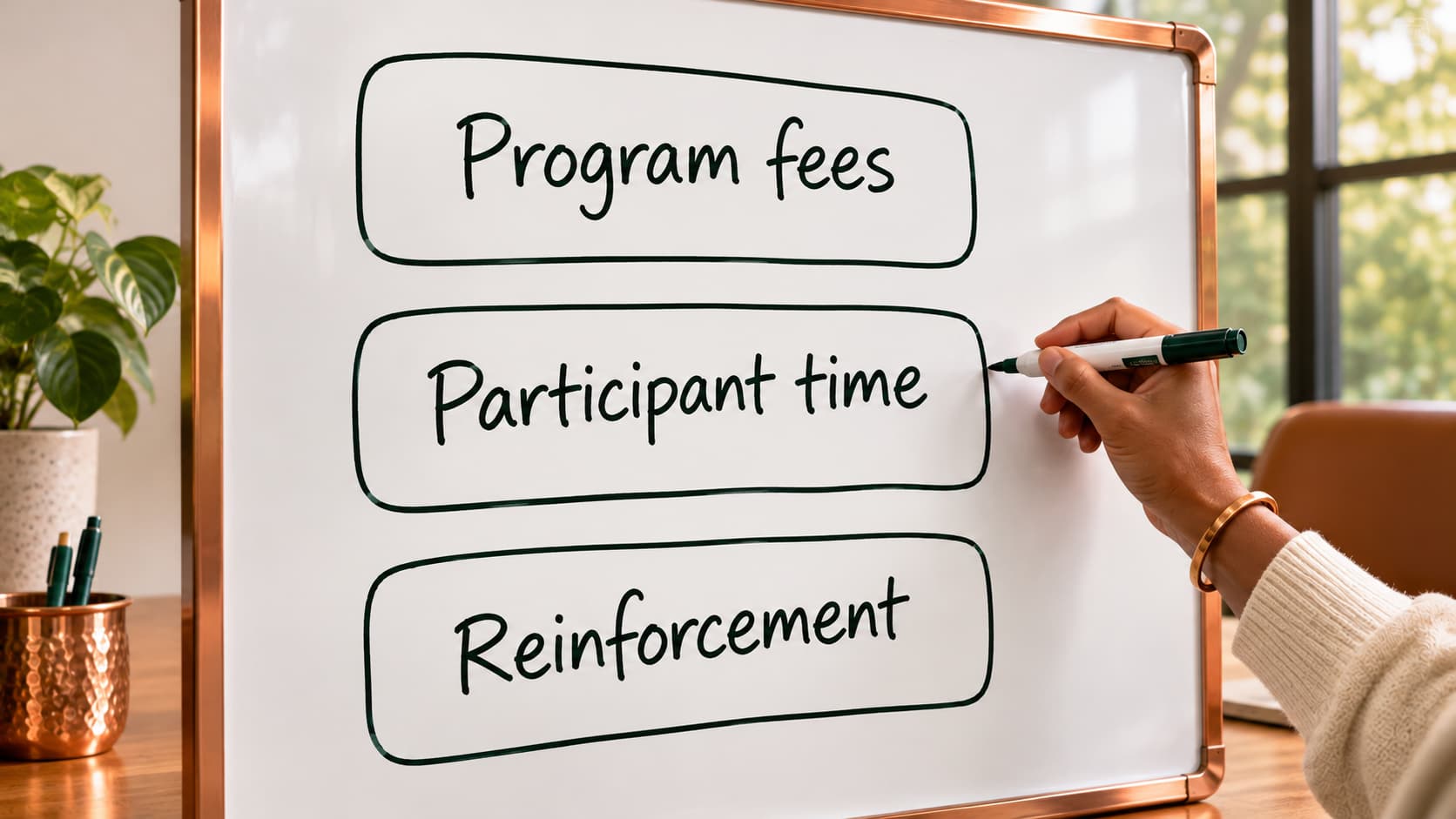
The cost of change management training includes program fees, participant time away from work, and reinforcement after the program. A case that lists only the fee leaves the other two unbudgeted, even though both still take up working hours.
What Program Fees and Delivery Costs Belong in the Case?
Program fees and delivery costs in the case should cover the provider's quoted fee for the format you recommend, plus travel, venue, and materials where they apply. Fees can take one of three forms: a per-seat price for public classes, a price for a private cohort, or a multi-year license that lets your own trainers deliver the method.
Spread a license across the years it covers so it compares fairly with per-seat pricing. Our training paths list programs such as ChangePro Workshop, Introduction to AIM, and AIM Practitioner Certification, and we run ChangePro Workshop and AIM Practitioner Certification privately for groups of five or more.
How Should Participant Time Be Counted?
Participant time should be counted as the hours each person spends in sessions, pre-work, and applied practice, multiplied by the number of participants and then by a loaded hourly cost. A loaded hourly cost, sometimes called loaded labor cost, is salary plus benefits and overhead per hour. Ask the provider to state those hours in writing.
What Reinforcement Effort Should Be Included?
Reinforcement effort in the case should include the time and support needed after the program to keep the new behaviors in place. AIM defines reinforcement as what leaders recognize, resource, and apply consequences to, and rates it as the leader behavior with the greatest impact because it sets the consequences people respond to. Show manager follow-up time, plus any coaching, tools, measurement work, and sponsor time, as separate budget lines so the approver sees what follow-through costs.
How Do You Show That Training Worked?
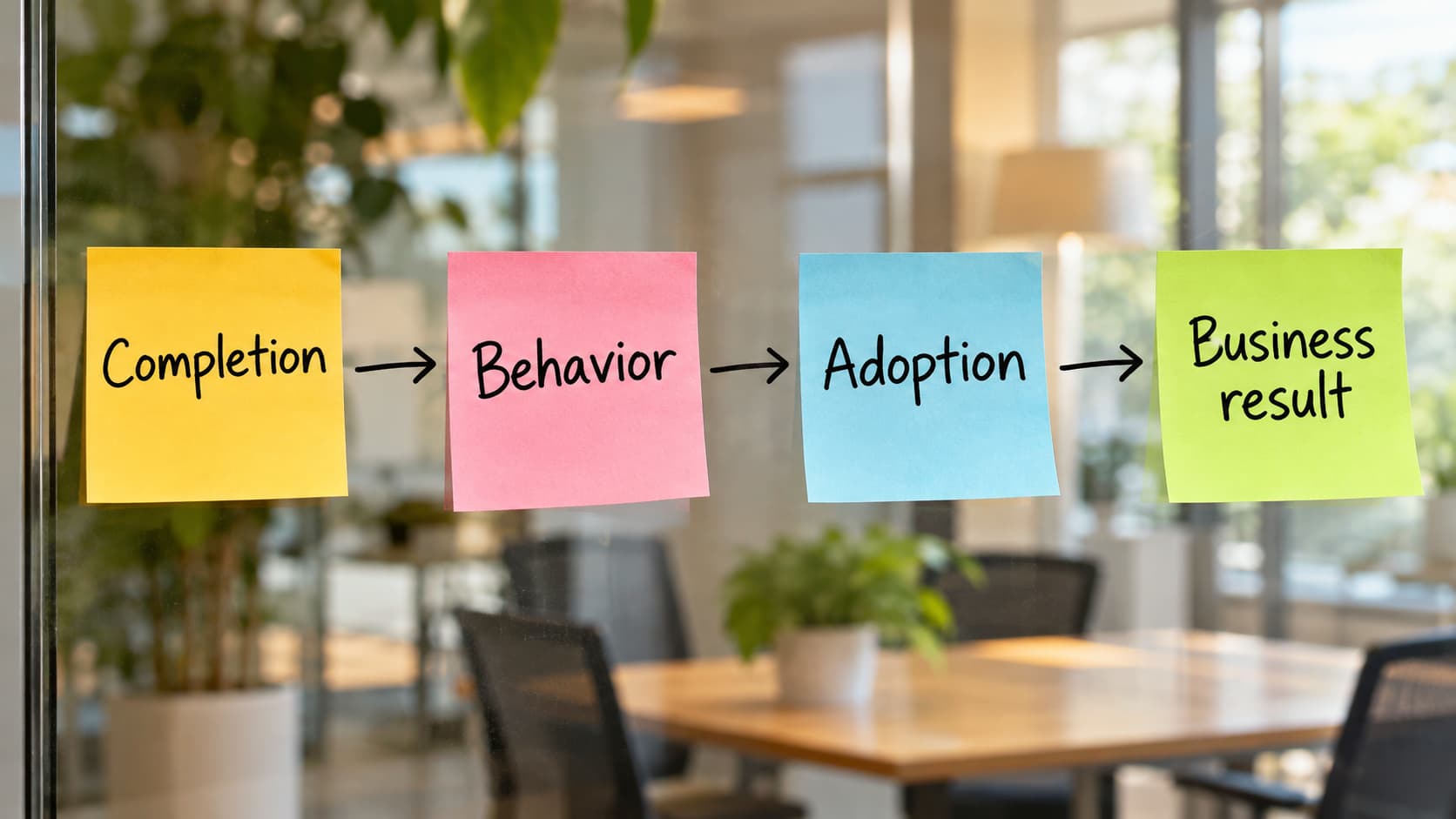
You show that training worked by reporting results at four separate levels, from completion through to business result, each measured against its own baseline. Measuring change management training value this way keeps attendance from being read as success, because completion shows only that the program was delivered.
| Level | What to measure | Baseline | Check-in plan |
|---|---|---|---|
| Completion | Who attended and finished the defined program | The number of people in the defined cohort | At the end of the program |
| Behavior | What participants now do differently, described as observable actions | How often those actions happen before training | At the first follow-up, then at set intervals |
| Adoption | Whether people use the new process, tool, or behavior in daily work | Current usage and workaround levels for the named teams | At set dates through the rollout |
| Business result | The initiative's relevant time, budget, technical, business, or Human Objective | The initiative's measures before training starts | At the dates the initiative's own business case sets |
Behavior is the leading indicator in this table, meaning the early signal of whether adoption will follow. Adoption and business results are lagging indicators that move later, while completion records a delivered activity. Tell the budget holder which level each check-in reports.
AIM judges implementation success with five measures: On Time, On Budget, Technical Objectives Met, Business Objectives Met, and Human Objectives Met. In our mapping, behavior measures the observable actions that support Human Objectives Met, while adoption shows whether those actions are present in daily work. The business result row corresponds to whichever measure the initiative was approved against. If finance asks for an ROI figure, it belongs in the business result row as well.
What Should a Business Case Outline Include?
A business case outline should include nine sections, set out in the order an approver reads them. Each field names its evidence so you can justify change management training budget requests. Use this as a change management training business case template.
- Decision requested: State the program, the cohort, the total amount from item 5, and the decision date from the initiative plan.
- Adoption problem: Name the initiative, the missing behaviors, and the current evidence for that gap, such as usage reports or workaround counts.
- Cost of the stall: Show your method for estimating delayed or lost value, using the original business case and the adoption level from your baseline.
- Proposed training: Describe the program, audience, roles, and delivery format from your participant plan. Name the managers whose teams are affected, whom AIM calls Reinforcing Sponsors because they are responsible for reinforcing the change day to day, and record how you selected the provider, using the criteria in our guide to choosing a training provider.
- Full cost: Add the fees from the written quote, participant hours multiplied by the loaded hourly cost from finance, and the reinforcement effort from your follow-up plan.
- Measures and baseline: List completion, behavior, adoption, and business result, each with its baseline value and check-in dates.
- Risks and dependencies: Record what the result relies on, including whether the senior leaders above the trainees will sponsor the change. In AIM, only leaders control the reinforcement of their own direct reports through what they review and recognize.
- Alternatives considered: Compare doing nothing, internal training, another provider, and licensing the method, giving each option the same cost and measurement lines.
- Recommendation: State the option you recommend, the decision you need, and the person who will own delivery and reporting.
How Should You Answer Common Approval Objections?
Answer common approval objections with evidence already in the case. The outline collects that evidence before the meeting, so the four questions below can be answered directly. Knowing how to get approval for change management training means preparing those answers before the discussion.
Why Train People When the Initiative Already Has a Project Plan?
An initiative that already has a project plan still needs trained managers and sponsors, because the plan schedules installation and stops short of implementation. AIM separates installation, the point where a system or process is live, from implementation, the stage after go-live when people use it in daily work and keep using it. A plan can set the go-live date, but it cannot make a manager explain the change to the team, adopt it visibly, and back it with recognition and consequences, the three leader behaviors AIM calls Express, Model, and Reinforce.
Why Pay for Training When People Can Read the Method?
Paid training is worth its cost when it adds applied practice and follow-up that reading the method alone does not provide. Self-study should be held to the same test as any other option in the case, which asks what it offers for practice on the live initiative and for checking behavior once the sessions end.
Why Train This Cohort Now?
The case for training this cohort now rests on the baseline, which shows behaviors missing while the named initiative is still rolling out. Training at this point lets the cohort apply what it learns to a change that is under way. Show how much of the rollout remains and which teams have not yet adopted the change, without promising a result by a particular date.
Why Not Build Internal Capability?
Building internal capability may be the right choice, and the case should evaluate it with the same cost and measurement lines as external training. Our pages on building change capability in-house and AIM Licensing describe both routes, including our 3-year enterprise license with Train-the-Trainer certification for your own trainers. Compare each route based on the number of people you expect to train and the time needed to have trainers ready.
Questions Leaders Ask About the Business Case
Who Should Approve a Change Management Training Business Case?
A change management training business case should be approved by the budget holder and by the initiative's Authorizing Sponsor, subject to your organization's governance. In AIM, the Authorizing Sponsor is the leader with the organizational authority to approve and fund the change, which makes them the right person to confirm that the training supports it.
Should the Business Case Support One Initiative or Build Wider Capability?
A business case for change management training can support one initiative or build wider capability, and the choice changes how you plan and measure it. A single-initiative case is easier to measure because its results are tied to one rollout, while a case to build internal change capability covers future changes and needs a longer measurement plan.
How Soon Can a Change Management Training Investment Show Results?
A change management training investment shows behavior results before business results, so the case should give each level an owner and a check-in date taken from the initiative's timeline. Completion can come from HR or the training team, behavior from the managers and sponsors who see it day to day, and adoption and business results from the initiative owner.
How Is a Business Case Different From an ROI Calculation?
A business case for change management training is the full decision document, and an ROI calculation is one section within it that compares net benefits with costs. The cost side of that calculation should use the same lines as the full-cost section, and our guide to ROI calculation for change management explains the method.
What Should You Do After the Business Case Is Approved?
After the business case is approved, record the baseline for the confirmed cohort before the first session and get the sponsors' commitments in writing. Then name an owner for reinforcement and put the check-in dates in the calendars of the people who will report them. If the approval leaves the provider decision open, our guide to choosing change management training sets out selection criteria, and our training paths show the program formats we offer.
Contact Us