
By Ann Marvin, IMA Worldwide
Executive sponsorship is essential in successfully managing change initiatives, especially with the integration of artificial intelligence (AI) within organizations. This strategic role involves leaders who not only endorse AI efforts but actively engage in driving their direction and outcomes. Successful AI change management requires a clear understanding of executive sponsorship’s nature, mechanisms, and its direct benefits, which foster organizational alignment and support transformational goals. Many businesses encounter challenges like resistance to change and inadequate resource allocation, which executive sponsors can effectively mitigate. To learn more about structured approaches to these transitions, explore the “AIM change management” methodology to leverage these elements for successful AI transformations.
Expert research highlights why a lack of comprehensive leadership involvement often undermines the potential of new technological integrations.
Why AI Transformation Fails: The Critical Role of Executive Leadership All too frequently, senior technology leaders view AI as a product that can be bought and turned on, rather than a transformation program for the entire enterprise that requires disciplined governance, data readiness, workforce engagement, and financial accountability. When Technology Works but Adoption Fails: Leadership Capability Gaps in Enterprise Artificial Intelligence Transformation, 2026
Best Practices for Fostering Effective Sponsorship:

Fostering effective sponsorship requires structured practices that align executive efforts with organizational objectives. Successful sponsors typically engage in the following:
Clear Role Definitions: Establishing unambiguous roles and responsibilities ensures that all stakeholders understand their contributions to AI initiatives, promoting accountability.
Regular Communication: Consistent updates and open dialog help maintain momentum, allowing teams to adjust strategies based on feedback and new insights.
Training and Support: Providing adequate training and resources empowers teams, enhancing their ability to embrace AI technologies effectively.
Engagement in Planning: Involving executives in the planning phase fosters ownership and commitment to the effort, creating a shared vision that aligns with business goals.
Regularly implementing these practices enhances the likelihood of successful outcomes by creating an environment where AI change can thrive.
Leadership Strategies to Drive AI Change:

Effective leadership strategies are essential for guiding organizations through AI change. Executives can adopt various approaches:
Active Sponsorship: Leaders must visibly support initiatives, showcasing their commitment and encouraging team participation.
Setting a Clear Vision: Articulating a compelling vision of the AI implementation path helps align team efforts toward shared goals.
Building Trust: Establishing a culture of trust allows team members to feel secure in their roles and confident in the transformative process.
Encouraging Ownership: Empowering employees to take ownership can boost morale and foster innovation, driving the change process forward.
These strategies play a vital role in establishing a robust framework for successful AI change management, often supported by professional development through “change management certification” programs.
Applying rigorous change management frameworks is particularly critical in complex environments where the technical and human components of AI must be carefully synchronized.
Implementing AI in Healthcare: The Importance of Change Management Models The paper concludes the necessity for a change management model, considering the magnitude and novelty of the change, which consequently indicates that in order to improve the delivery of medical services, by reducing cost, increasing accuracy and precision, an artificial intelligence initiative must be put in place, aided by change management. Accelerating Change in Healthcare: Leveraging Kotter’s Model for a Successful Integration of Artificial Intelligence., 2023
Impact of Executive Support on AI Initiatives:
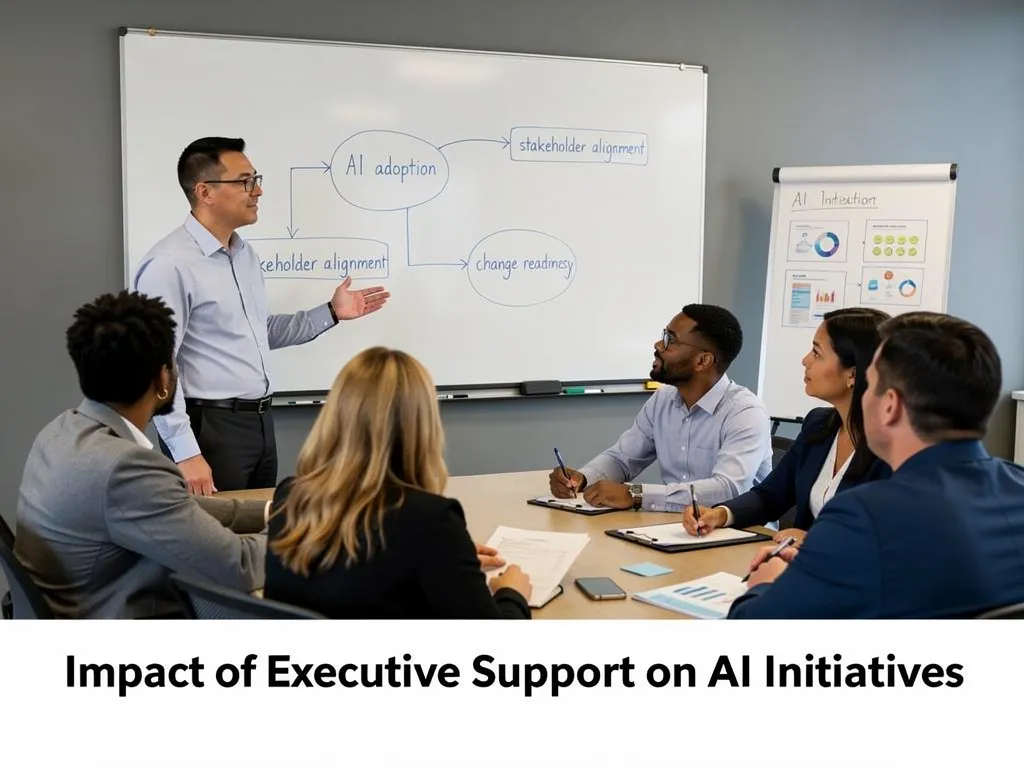
The influence of executive support on AI initiatives is profound and multi-dimensional. Key impacts include:
Enhanced Adoption Rates: Strong executive backing leads to higher acceptance and integration of AI technologies, ensuring that efforts meet business needs effectively.
Resource Allocation: Executives typically have access to essential resources, enabling the allocation of needed financial and human capital to AI initiatives.
Mitigating Resistance: Leadership support can alleviate apprehensions among employees, reducing resistance and paving the way for smoother transitions.
Sustained Momentum: Continuous executive engagement maintains enthusiasm for AI initiatives, ensuring they remain a priority even amidst challenges.
By understanding these impacts, organizations can better leverage executive support to enhance their AI endeavors. For further assistance in aligning your leadership strategies, you can “contact our team” to discuss tailored solutions for your business.
What is the Role of Executive Sponsorship in AI Change Management?

Executive sponsorship plays a pivotal role in AI change management by acting as the bridge between teams and organizational goals. Sponsors are responsible for:
Strategic Signaling: Their endorsement signals the significance of the effort, compelling teams and stakeholders to recognize its importance.
Cultural Alignment: Sponsors help ensure that AI initiatives align with the broader organizational culture, facilitating smoother adoption.
Resource Provision: They secure the necessary resources, including budget and skilled professionals, critical for successful implementation.
Trust Building: Establishing trust among teams helps cultivate collaboration and engagement throughout the change process.
These responsibilities underscore the essential nature of executive sponsorship in navigating AI transformations.
How Executive Leadership Drives Successful AI Transformations
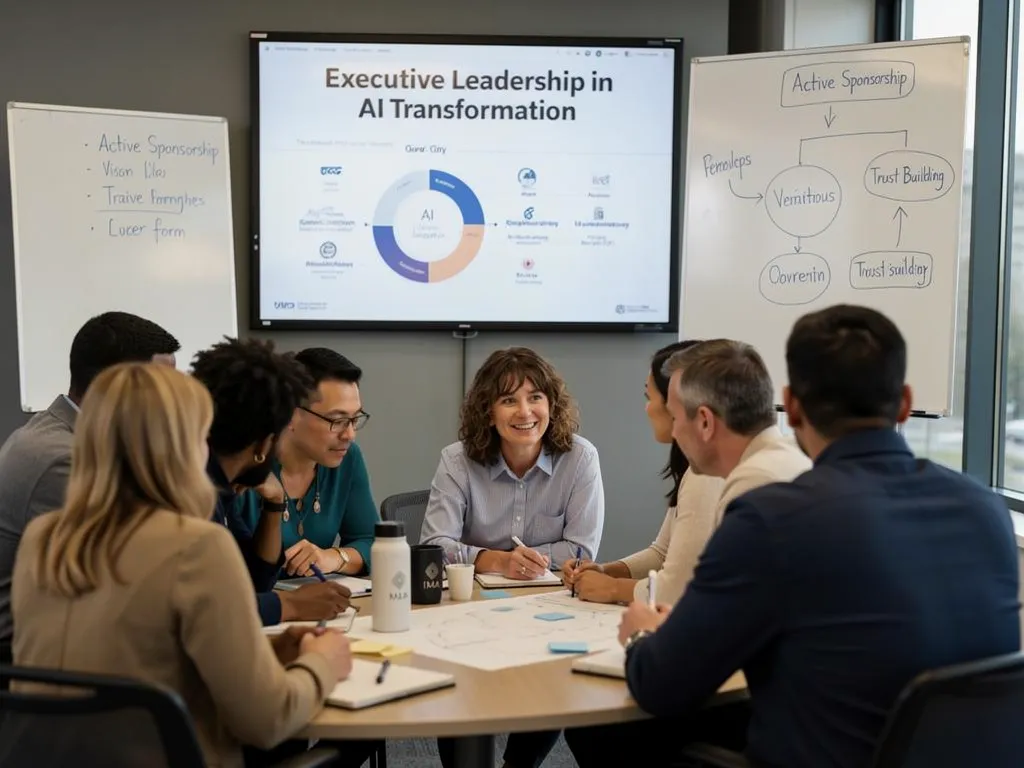
Executive leadership is integral to steering successful AI transformations, characterized by:
Active Sponsorship: Leaders must remain engaged and present, displaying their commitment to the AI initiative.
Vision Clarity: A transparent vision helps teams understand the desired outcomes of AI integration, unifying efforts across departments.
Trust Building: Fostering an environment of trust encourages collaboration, essential for overcoming challenges that arise during transformation.
Ownership Encouragement: Allowing teams to take initiative empowers individuals, instilling a sense of investment in the outcomes of AI changes.
The interplay of these elements defines how effectively leadership can influence the trajectory of AI transformations.
What Responsibilities Do Change Sponsors Hold in AI Initiatives?

Change sponsors bear considerable responsibilities that are vital for the success of AI efforts:
Active Sponsorship Engagement: They must engage actively with teams, providing guidance and support throughout the lifecycle.
Aligning Vision with Culture: Ensuring that the vision resonates with organizational values fosters acceptance and integration.
Resource Allocation: Sponsors are crucial in securing the necessary financial backing and human capital for success.
Building Trust: Establishing strong relationships within teams promotes collaboration and facilitates smoother transitions during change processes.
By fulfilling these responsibilities, sponsors lay a solid foundation for successful AI integration.
Which Sponsorship Models and Frameworks Support AI Change Success?
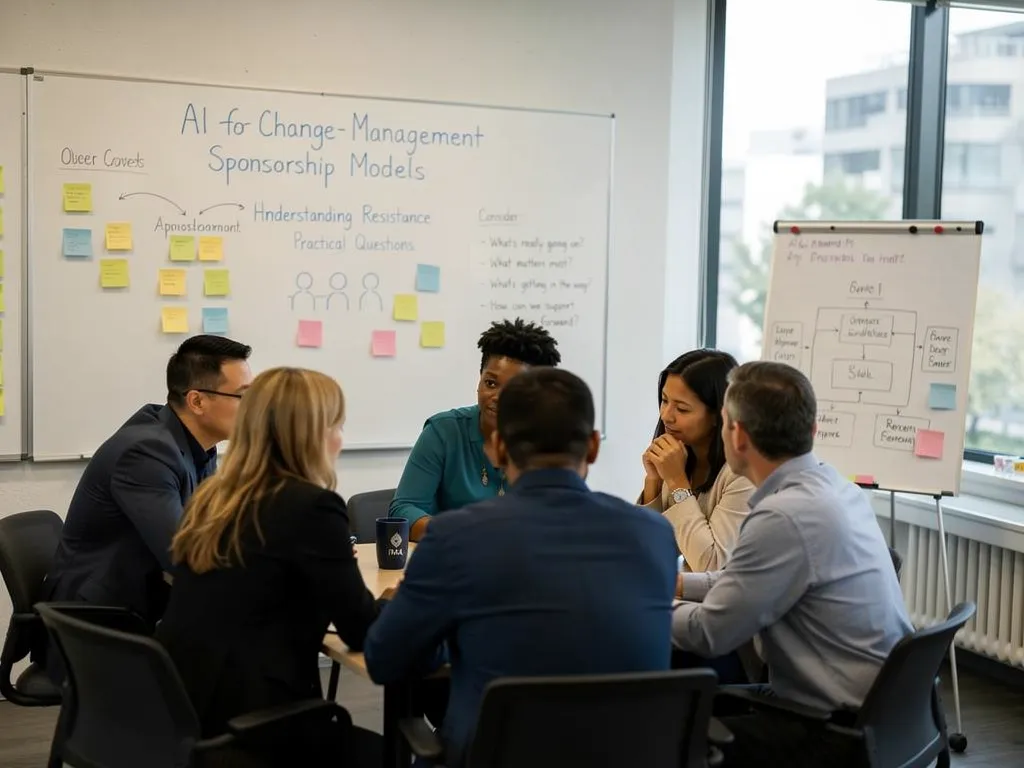
Several sponsorship models and frameworks can enhance the likelihood of success during AI change initiatives:
Active Sponsorship Model: This model emphasizes ongoing engagement and visibility of sponsors throughout the change process.
AIM Methodology: This structured approach focuses on aligning AI initiatives with organizational objectives, ensuring relevance and impact.
Sponsorship Commitment Framework: This framework provides guidelines for establishing and maintaining sponsorship commitment, fostering long-term support.
Risk Management: Incorporating risk management strategies within sponsorship emphasizes the importance of navigating potential challenges during AI changes.
Understanding these frameworks allows organizations to select strategies that best fit their operational context.
How Does the AIM Model Define Sponsor Cascade Benefits?

The AIM Model illustrates the cascading benefits of an active sponsorship approach in AI change management:
Flow of Active Sponsorship: Active sponsors create a culture of accountability, enhancing team dynamics.
Cascading Communication: With clear communication from executives to all levels of the organization, engagement improves and initiatives become more cohesive.
Middle Management Roles: Middle managers serve as vital conduits, translating executive support into actionable strategies for their teams.
Reinforcement Systems: Implementing feedback systems helps reinforce sponsor engagement, ensuring that support remains consistent and meaningful.
This model emphasizes the holistic effects of sponsorship throughout the organization.
What Are Key Features of Effective Change Management Sponsorship Models?
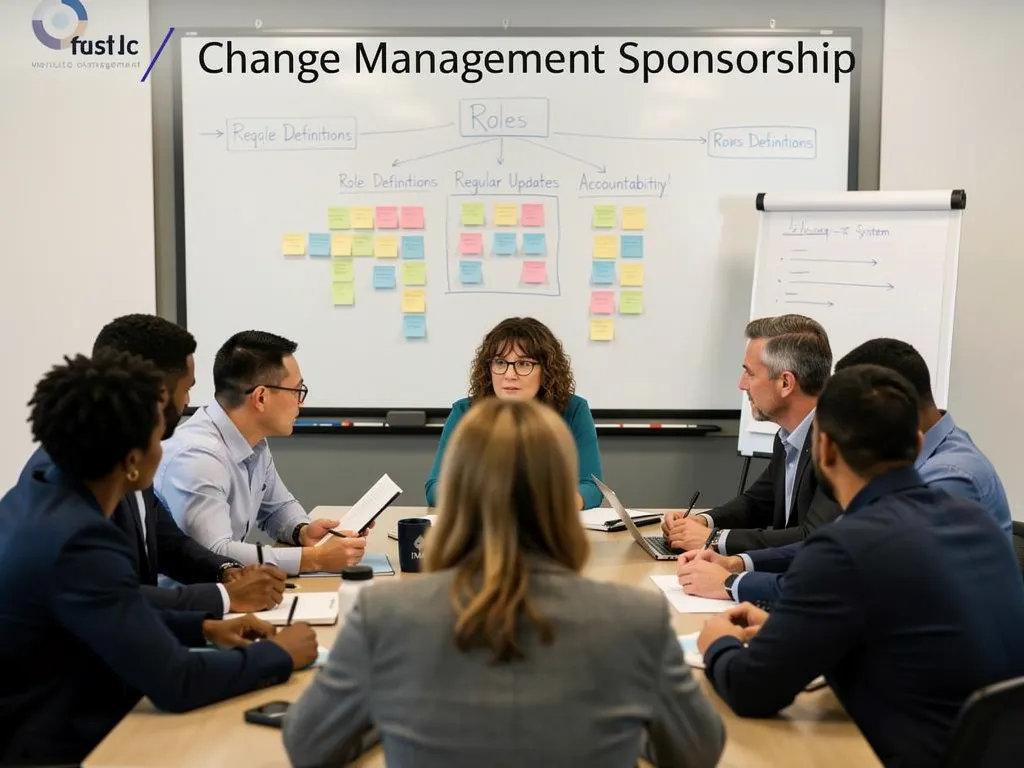
Effective change management sponsorship models share several key features that enhance their impact, such as:
Clear Role Definitions: Precise definitions ensure that every participant understands their responsibilities, fostering accountability.
Regular Updates: Consistent communication keeps teams informed and engaged throughout the change process, ensuring alignment.
Accountability Systems: Mechanisms for tracking sponsorship engagement create accountability and highlight areas for improvement.
Communication Clarity: Explicit communication enables all parties to understand goals and expectations, reducing misunderstandings and resistance.
These features are fundamental to designing robust sponsorship models that facilitate successful outcomes in change management.
How Can Organizations Measure AI Adoption and Benefits Realization?

Measuring AI adoption and benefits realization involves various strategies to ensure comprehensive evaluation:
Behavioral Metrics vs Activity Metrics: Distinguishing between the two can highlight not just what activities occur, but how they influence performance.
Employee Engagement Tracking: Measuring workforce engagement levels can provide insights into the success of AI integration efforts.
Productivity Assessment: Assessing productivity changes directly links AI implementation with organizational performance improvements.
Sustained Sponsor Engagement: Evaluating the ongoing involvement of sponsors can help correlate their support with success.
These approaches ensure that organizations can assess the effectiveness of their AI initiatives comprehensively.
What Metrics Track Adoption Rates and ROI in AI Deployments?

Organizations must identify key metrics to effectively track adoption rates and ROI in AI deployments, including:
Adoption Rates: Monitoring how quickly teams embrace AI solutions provides insights into overall penetration and acceptance.
Time-to-Skill Measures: Evaluating the time taken by employees to become proficient with new technologies helps assess training effectiveness.
ROI Analysis: Financial metrics that evaluate the return on investment for AI efforts help justify ongoing funding and resource allocation.
Behavioral Adoption Tracking: Studying user behavior concerning new AI tools reveals levels of integration and practical usage.
Utilizing these metrics allows organizations to gauge the success of AI deployments accurately.
How Does Executive Sponsorship Influence Benefits Realization?

Executive sponsorship plays a central role in the realization of benefits tied to AI initiatives by facilitating:
Active Support Benefits: An engaged sponsor provides the backing necessary for teams to implement solutions effectively.
Behavior Change Measurement: Monitoring behavior changes linked to AI adoption can illustrate progress and areas needing adjustment.
Sustained Engagement: Continuous involvement from sponsors ensures initiatives remain a priority, supporting ongoing success.
Measurement Metrics: Establishing clear success metrics aligns outcomes with organizational objectives, enhancing clarity and purpose.
Through these mechanisms, executive sponsorship becomes pivotal in ensuring that organizations derive real benefits from their AI investments.
What Strategies Mitigate Risks in AI Change Through Executive Sponsorship?

Effective strategies for risk mitigation in AI change initiatives through executive sponsorship include:
Active Engagement: Sustained executive involvement helps preempt issues before they escalate, ensuring swift resolution.
Cascading Sponsorship: Distributing sponsorship responsibility across various levels of management promotes a culture of accountability and support.
Clear Communication: Maintaining candid communication channels reduces misunderstandings and facilitates smoother transitions.
Support Systems: Implementing structured support systems allows for proactive identification and addressing of potential challenges.
Applying these strategies enhances the potential for successful change initiatives by minimizing risks.
How Does Governance Address Compliance and Operational Risks?

Governance frameworks play a critical role in addressing compliance and operational risks within AI initiatives by:
Governance Structures: Establishing clear governance structures delineates accountability and decision-making authority, facilitating better management.
Risk Assessment Frameworks: Implementing frameworks allows organizations to identify potential compliance risks early in the change process.
Compliance Measures: Adhering to regulations ensures that AI implementations do not violate legal requirements, protecting the organization from penalties.
Operational Oversight: Effective oversight ensures that AI initiatives align with both strategic goals and compliance needs, promoting smoother operations.
These governance strategies are essential in promoting a responsible and compliant approach to AI change management.
What Role Do Sponsors Play in Reducing AI Transformation Risks?

Sponsors play an essential role in minimizing risks associated with AI transformations, primarily through:
Active Communication: Keeping lines of communication open between sponsors and teams allows for rapid response to emerging challenges.
Stakeholder Engagement: Engaging stakeholders throughout the transformation process ensures diverse perspectives are considered, reducing potential pushback.
Change Facilitation: Sponsors facilitate necessary changes by advocating for resource allocation and support.
Risk Navigation: Their experience allows them to anticipate challenges, guiding teams effectively through change.
By focusing on these areas, sponsors can significantly reduce the inherent risks associated with AI transformations, aligning outcomes with organizational aspirations.
